
Add YOUR Family To This Page
 History of Québec, Québec, Canada
Journey back in time to Québec, Québec, Canada
(Quebec City)
Explore Québec, Québec, Canada! Uncover its rich history and discover the stories of the people who once called it home. Dive into old newspaper articles, vintage pictures, postcards, and genealogy to learn more about this fascinating town.Do You Have Québec Ancestry? Share YOUR Family Story!

Québec City, Québec, Canada
Pronunciation: KAY-Behk
Québec City, often simply referred to as Québec, is the capital city of the Canadian province of Quebec. It is one of the oldest cities in North America, with a rich history dating back to its founding in 1608 by Samuel de Champlain.
Québec City is the only walled city in North America, making it a rare example of a fortified colonial town. The walls and fortifications were originally built to protect the city from potential invasions, and parts of them are still standing today.
Québec City is deeply rooted in French culture and language. It's one of the few places in North America where French is the official language, and the city's architecture, cuisine, and way of life reflect this French heritage.
Walking through the streets of Québec City can often feel like being in a European city, with its charming architecture, narrow streets, and cozy cafes.
Explore even more about Québec, Québec, Canada. Keep reading!
Postcards and Memories of Québec, Québec, Canada
Québec Nostalgia: Vintage Photos, Ads, and Postcards
Québec, Québec, Canada
Photograph
 - Cathedral-Basilica of Notre-Dame de Québec
16, rue de Buade, Quebec City, Quebec
Located on this site since 1647, the cathedral has twice been destroyed by fire throughout the centuries.
wikipedia)
Cathedral-Basilica of Notre-Dame de Québec
16, rue de Buade, Quebec City, Quebec
Located on this site since 1647, the cathedral has twice been destroyed by fire throughout the centuries.
wikipedia

Québec, Québec, Canada
Artwork
 - Quebec, 1874)
Quebec, 1874

Québec, Québec, Canada
Postcard
 - Chateau Frontenac, Quebec City)
Chateau Frontenac, Quebec City

Québec, Québec, Canada
Postcard
 - City Hall. Hotel De Ville. Quebec. Canada.)
City Hall. Hotel De Ville. Quebec. Canada.

Québec, Québec, Canada
Postcard
 - General View of Quebec City from Levis)
General View of Quebec City from Levis

Québec, Québec, Canada
Postcard
 - Rue De La Fabrique, Quebec)
Rue De La Fabrique, Quebec

Québec, Québec, Canada
Postcard
 - Little Champlain Street - Petite Rue Champlain - Quebec, Canada)
Little Champlain Street - Petite Rue Champlain - Quebec, Canada

Québec, Québec, Canada
Postcard
 - Place d'Armes, Quebec, P.Q., Canada)
Place d'Armes, Quebec, P.Q., Canada

Québec, Québec, Canada
Postcard
 - St. Louis Gate, City of Quebec, Canada.)
St. Louis Gate, City of Quebec, Canada.

Québec, Québec, Canada
Postcard
 - Mountain Hill, Quebec, Canada.)
Mountain Hill, Quebec, Canada.

Québec, Québec, Canada
Postcard
 - The Quebec Caleche)
The Quebec Caleche

Québec, Québec, Canada
(IL) - Chicago Tribune, Chicago, Illinois
 - )

Québec, Québec, Canada
Postcard
 - Sight-seeing Car, Quebec, Canada)
Sight-seeing Car, Quebec, Canada

Québec, Québec, Canada
Postcard
 - Champlain Market, Quebec)
Champlain Market, Quebec

Québec, Québec, Canada
Postcard
 - Original Chien D'Or House, Quebec)
Original Chien D'Or House, Quebec

Québec, Québec, Canada
Postcard
 - Dufferin Terrace and Lower Town from the Citadel, Quebec)
Dufferin Terrace and Lower Town from the Citadel, Quebec

Québec, Québec, Canada
Postcard
 - Parliament Buildings)
Parliament Buildings

Québec, Québec, Canada
Postcard
 - South African Monument)
South African Monument

Québec, Québec, Canada
Postcard
 - Terrace and Chateau, Quebec)
Terrace and Chateau, Quebec

Québec, Québec, Canada
Postcard
 - The Union Station - La Gare Union, Quebec, Canada)
The Union Station - La Gare Union, Quebec, Canada

Québec, Québec, Canada
Postcard
 - Bird's Eye View of Quebec City looking North East, P.Q.)
Bird's Eye View of Quebec City looking North East, P.Q.

Québec, Québec, Canada
Postcard
 - Break-Neck Steps, Quebec, Canada)
Break-Neck Steps, Quebec, Canada

Québec, Québec, Canada
Postcard
 - Kent House Hotel and Montmorency Falls)
Kent House Hotel and Montmorency Falls

Québec, Québec, Canada
Postcard
 - Montcalm's House, Quebec, Canada)
Montcalm's House, Quebec, Canada

Québec, Québec, Canada
Postcard
 - New Post Office, Quebec, Canada)
New Post Office, Quebec, Canada

Québec, Québec, Canada
Postcard
 - Petite Rue Champlain (Little Champlain Street))
Petite Rue Champlain (Little Champlain Street)

Québec, Québec, Canada
Postcard
 - Sous Le Cap (Narrowest Thoroughfare in Canada))
Sous Le Cap (Narrowest Thoroughfare in Canada)

Québec, Québec, Canada
Postcard
 - Vue, montant la Cote de la Montagne - Looking up Mountain Hill, Quebec, P.Q.)
Vue, montant la Cote de la Montagne - Looking up Mountain Hill, Quebec, P.Q.

Québec, Québec, Canada
Postcard
 - Chateau Frontenac and Dufferin Terrace, Quebec, Canada, 1927)
Chateau Frontenac and Dufferin Terrace, Quebec, Canada, 1927

Québec, Québec, Canada
Postcard
 - Notre Dame Des Victoires Church, Quebec)
Notre Dame Des Victoires Church, Quebec
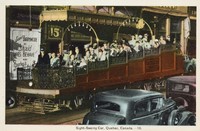
Québec, Québec, Canada
Postcard
 - Sight-Seeing Car)
Sight-Seeing Car

Québec, Québec, Canada
Postcard
 - Harbour of Quebec, Canada, 1940s)
Harbour of Quebec, Canada, 1940s

Québec, Québec, Canada
Advertisement
 - Chateau Frontenac ad)
Chateau Frontenac ad
Discover Unique Gift Ideas and Genealogy Resources From or Related to QUÉBEC


I Love QUÉBEC Mug – Poutine, Tourtière & Tarte au Sucre Quebec Coffee Cup
Savor the flavors of Québec with every sip from our vibrant Ceramic Mug! Crafted with love, this mug is a tribute to the iconic culinary delights of Québec, featuring mouthwatering illustrations of Poutine, Tourtière, and Tarte au Sucre. If you're passionate about Québecois cuisine or simply want to show your love for this beautiful province, this mug is the perfect choice.

CHRISTMAS - FRENCH CANADIAN Coffee Mug – Celebrate Family, Heritage, and Holiday Cheer
Sip Christmas the way your ancestors would have loved it with this festive French-Canadian coffee mug. Featuring the elegant greeting “Joyeuses fêtes de Noël à vous et vos proches!” (Merry Christmas to you and your loved ones), it’s perfect for genealogy enthusiasts, Francophiles, and anyone who cherishes family traditions. Joyeuses fêtes de Noël – literally “Happy Christmas holidays,” which is a common way to wish someone a merry Christmas and holiday season in French. à vous et vos proches – “to you and your loved ones,” adding a friendly, inclusive touch.

CANADA - Canadian Roots Genealogy Coffee Mug - Curling and Olympics
"My ancestors came from Canada. That explains a lot about my love for curling and watching the Olympics!"

CANADA - Canadian Roots Ceramic Coffee Mug - Maple Syrup and Apologies Edition - Genealogy
Embrace your Canadian heritage with our "My ancestors came from Canada" ceramic coffee mug! Perfect for sipping your favorite brew while reflecting on your roots, this mug features a moose sampling maple syrup and a humorous caption that reads, "My ancestors came from Canada. That explains a lot about my love for maple syrup and apologizing!" Whether you're enjoying your morning coffee or unwinding with an evening tea, this mug is sure to bring a smile to your face.

QUÉBEC, Canada Roots Canadian Genealogy Coffee Mug Gift Idea - Celebrate Your Quebec Heritage in Style
Raise your morning cup to your rich Québecois heritage with this charming Québec Roots Genealogy Coffee Mug! Perfect for proud descendants of Québec, this ceramic mug features the bold phrase "Québec Roots" – a nod to the generations that have shaped your family’s history.
Discover Québec: History, News, Travel, and Stories

1608 - Samuel de Champlain arrives in Quebec
In the year 1541, French explorer Jacques Cartier was the first to arrive in Quebec. He attempted to set up a French colony in Quebec, but failed. The French colony was later founded and set up in the year 1608 by another French explorer named Samuel de Champlain in a series of voyages that he undertook to Canada.
www.buzzle.com/articles/ french-canadian-culture.html
Read more about Samuel DE CHAMPLAIN
In the year 1541, French explorer Jacques Cartier was the first to arrive in Quebec. He attempted to set up a French colony in Quebec, but failed. The French colony was later founded and set up in the year 1608 by another French explorer named Samuel de Champlain in a series of voyages that he undertook to Canada.
www.buzzle.com/articles/ french-canadian-culture.html
Read more about Samuel DE CHAMPLAIN
1617 - Louis Hébert, an apothecary who had stayed at Port Royal twice, brings his wife and children to Québec, thus becoming the first true habitant (permanent settler supporting his family from the soil).
fccs.ok.ubc.ca/about/links/resources/canadian-history/prehistory-to-1800.html
Read more about Louis HÉBERT
fccs.ok.ubc.ca/about/links/resources/canadian-history/prehistory-to-1800.html
Read more about Louis HÉBERT
1639 - Hôtel-Dieu de Québec was founded by Augustinians
Father Paul Le Jeune made a call in 1635 for women to help evangelize the Indians in the New World. The Superior of the Jesuit Mission’s plan was for the women to work through a hospital and girls’ school to nurse the ailing Indians and educate young girls, and bring them to God. Property for the building was located and clearing of the land began in 1637. Construction got underway the next year, funded by the generous donations of Duchesse d’Aiguillon. The first hospital in Canada, in fact the first in North America above Dominican Republic, Hotel-Dieu de Québec was completed in 1639.
suite101.com/ a/ hoteldieu-of-quebec- canadas-first-hospital-a170813
Father Paul Le Jeune made a call in 1635 for women to help evangelize the Indians in the New World. The Superior of the Jesuit Mission’s plan was for the women to work through a hospital and girls’ school to nurse the ailing Indians and educate young girls, and bring them to God. Property for the building was located and clearing of the land began in 1637. Construction got underway the next year, funded by the generous donations of Duchesse d’Aiguillon. The first hospital in Canada, in fact the first in North America above Dominican Republic, Hotel-Dieu de Québec was completed in 1639.
suite101.com/ a/ hoteldieu-of-quebec- canadas-first-hospital-a170813
1647 - Notre-Dame de Québec Cathedral is constructed
Built on the site of the first chapel constructed by Champlain in 1633, Notre-Dame de Québec Church was erected in 1647 and was called Notre-Dame-de-la-Paix. In 1664, it became the first parish church in North America. In 1674, the church took the title of cathedral, following the appointment of Mgr. de Laval as bishop of the new diocese of Québec. Due to the church’s new title, certain modifications were conducted on the building and on its décor. It was ravaged by the bombardments that occurred during the English Conquest in 1759, and was reconstructed a few years later. On December 22, 1922, a fire once again destroyed the cathedral. In 1923, they began the construction of the present-day church.
www.patrimoine-religieux.com/ en/ our-churches/ notre-dame-de-quebec- basilica-cathedral-/
Built on the site of the first chapel constructed by Champlain in 1633, Notre-Dame de Québec Church was erected in 1647 and was called Notre-Dame-de-la-Paix. In 1664, it became the first parish church in North America. In 1674, the church took the title of cathedral, following the appointment of Mgr. de Laval as bishop of the new diocese of Québec. Due to the church’s new title, certain modifications were conducted on the building and on its décor. It was ravaged by the bombardments that occurred during the English Conquest in 1759, and was reconstructed a few years later. On December 22, 1922, a fire once again destroyed the cathedral. In 1923, they began the construction of the present-day church.
www.patrimoine-religieux.com/ en/ our-churches/ notre-dame-de-quebec- basilica-cathedral-/
A Glimpse into the Past: Life in Quebec City in the Mid-1600s
Introduction
Quebec City, nestled along the scenic banks of the St. Lawrence River, holds a rich tapestry of history dating back to the mid-1600s. Stepping into this period is like entering a time capsule, where the cobbled streets and fortress walls echo the tales of early French settlers and indigenous peoples coexisting in a delicate balance. In this blog post, we'll take a journey back to the heart of New France and explore the daily life, challenges, and triumphs of the inhabitants of Quebec City during this fascinating era.
The Landscape
Imagine the Quebec City of the mid-17th century, a settlement surrounded by dense forests and expansive waterways. The rugged wilderness provided not only a breathtaking backdrop but also crucial resources for survival. The St. Lawrence River, a lifeline for trade and transportation, served as a vital artery connecting the settlement to the wider world.
The heart of the city was dominated by the imposing presence of Fort Saint-Louis, ... Read MORE...
Introduction
Quebec City, nestled along the scenic banks of the St. Lawrence River, holds a rich tapestry of history dating back to the mid-1600s. Stepping into this period is like entering a time capsule, where the cobbled streets and fortress walls echo the tales of early French settlers and indigenous peoples coexisting in a delicate balance. In this blog post, we'll take a journey back to the heart of New France and explore the daily life, challenges, and triumphs of the inhabitants of Quebec City during this fascinating era.
The Landscape
Imagine the Quebec City of the mid-17th century, a settlement surrounded by dense forests and expansive waterways. The rugged wilderness provided not only a breathtaking backdrop but also crucial resources for survival. The St. Lawrence River, a lifeline for trade and transportation, served as a vital artery connecting the settlement to the wider world.
The heart of the city was dominated by the imposing presence of Fort Saint-Louis, ... Read MORE...
1650 - September 1: Father Gabriel Druillettes (1610-1681) departed Quebec for Boston to establish an alliance with New England against the Iroquois, but he was unsuccessful.
In 1650, Father Gabriel Druillettes, a French Jesuit missionary based in Quebec, set out on a diplomatic and missionary journey that took him all the way to Boston in an effort to forge an alliance with the New England colonies against the Iroquois Confederacy. He wasn’t simply traveling as a missionary among Indigenous nations but was also acting as an envoy of the French colonial government, charged with negotiating with the English in hopes of securing mutual protection and support against the powerful Iroquois, who were then threatening French interests and their Indigenous allies.
Druillettes and his Indigenous companion, Noël Negabamat, traveled down the Chaudière and Kennebec rivers, reaching Boston in December 1650, where he was received courteously by prominent figures in the English colonies, including the Puritan missionary John Eliot and colonial officials, despite laws in Massachusetts that restricted Jesuit priests. While the gesture of hospitality was genuine, his... Read MORE...
In 1650, Father Gabriel Druillettes, a French Jesuit missionary based in Quebec, set out on a diplomatic and missionary journey that took him all the way to Boston in an effort to forge an alliance with the New England colonies against the Iroquois Confederacy. He wasn’t simply traveling as a missionary among Indigenous nations but was also acting as an envoy of the French colonial government, charged with negotiating with the English in hopes of securing mutual protection and support against the powerful Iroquois, who were then threatening French interests and their Indigenous allies.
Druillettes and his Indigenous companion, Noël Negabamat, traveled down the Chaudière and Kennebec rivers, reaching Boston in December 1650, where he was received courteously by prominent figures in the English colonies, including the Puritan missionary John Eliot and colonial officials, despite laws in Massachusetts that restricted Jesuit priests. While the gesture of hospitality was genuine, his... Read MORE...
1652 - Kebec
Kebec is 120 miles upstream from Tadusac and is a fortress of the French. It is constructed upon a mountain, at the narrowest point of this St. Lawrence River. There is a French colony there, and, quite recently, a Huron one; and the Barbarians called Algonquin spend several months of the year there before going to their hunt.
www.telusplanet.net/ public/dgarneau/french15.htm
Kebec is 120 miles upstream from Tadusac and is a fortress of the French. It is constructed upon a mountain, at the narrowest point of this St. Lawrence River. There is a French colony there, and, quite recently, a Huron one; and the Barbarians called Algonquin spend several months of the year there before going to their hunt.
www.telusplanet.net/ public/dgarneau/french15.htm
1660 - Shoes (Quebec)
The Jesuits claim the engage system was originated some time before this date to increase the population of Quebec. Their terms of employment were 3 years. Many of these engages became Coureurs de Bois. Engages or indentured slaves however were employed as early as 1634.
About this time, the profession of cobblers or harness makers started in Quebec. They started producing French style shoes, but the population wanted Indian footwear. They adopted the Native moccasins and high soft boots that were water resistance. The trades were not governed by statutes and regulations of French guilds, despite repeated attempts by Intendant (I)-Jean Talon (1625-1694) to establish such regulations.
www.telusplanet.net/ public/dgarneau/french17.htm
The Jesuits claim the engage system was originated some time before this date to increase the population of Quebec. Their terms of employment were 3 years. Many of these engages became Coureurs de Bois. Engages or indentured slaves however were employed as early as 1634.
About this time, the profession of cobblers or harness makers started in Quebec. They started producing French style shoes, but the population wanted Indian footwear. They adopted the Native moccasins and high soft boots that were water resistance. The trades were not governed by statutes and regulations of French guilds, despite repeated attempts by Intendant (I)-Jean Talon (1625-1694) to establish such regulations.
www.telusplanet.net/ public/dgarneau/french17.htm
1663 - The Great Earthquake (Quebec)
February 5: Just before the Great Earthquake, Quebec was in carnival, orgies, drinking bouts, and dances, not to speak of some things more serious, which may offend chaste ears and are better passed over in silence than mentioned. Heaven and earth have spoken to us many times during this year.
February 5, 5:30P.M.: A great earthquake, centered near the mouth of the Saguenay River, shook the whole country, and some people thought the world was about to end. The priests used this natural phenomenon as a sign to align the people with their beliefs and values. Father (I)-Jerome Lalemant (1593-1673) wrote: "Mountains were swallowed up, forests were changed into great lakes, rivers disappeared, thunder rumbled beneath our feet, which belched forth flames." The Savages say: "All the woods were drunken." Pikes and lances of fire were seen, waving in the air. At Three Rivers: The first and severest of all the shocks began with a rumbling like that of thunder, the house were... Read MORE...
February 5: Just before the Great Earthquake, Quebec was in carnival, orgies, drinking bouts, and dances, not to speak of some things more serious, which may offend chaste ears and are better passed over in silence than mentioned. Heaven and earth have spoken to us many times during this year.
February 5, 5:30P.M.: A great earthquake, centered near the mouth of the Saguenay River, shook the whole country, and some people thought the world was about to end. The priests used this natural phenomenon as a sign to align the people with their beliefs and values. Father (I)-Jerome Lalemant (1593-1673) wrote: "Mountains were swallowed up, forests were changed into great lakes, rivers disappeared, thunder rumbled beneath our feet, which belched forth flames." The Savages say: "All the woods were drunken." Pikes and lances of fire were seen, waving in the air. At Three Rivers: The first and severest of all the shocks began with a rumbling like that of thunder, the house were... Read MORE...
1664 - Bathing and such (Quebec)
At this time the colonists rarely bathe, believing a bath would cause colic, headaches and vertigo. This European tradition usually resulted in a May bath with June weddings before they started to smell too bad. The brides carried a bouquet of flowers to hid the body odor. Both male and female wore sachets of dried flowers for the same purpose. The natives bathed fairly often and couldn't understand this strange practice.
The French court was told most of the Quebec population were mainly unmarried males, many of whom interbred freely with the savages, wasting their seed among the pagans, instead of increasing the strength of the colony. Most of these Metis offspring are absorbed into the Indian population and are not recorded in the French records. This situation led to the filles du roi program of sending orphan girls, daughters of debtors, streetwalkers and runaway wives to New France. Only fifteen out of the first 150 could not find husbands and ended up in domestic... Read MORE...
At this time the colonists rarely bathe, believing a bath would cause colic, headaches and vertigo. This European tradition usually resulted in a May bath with June weddings before they started to smell too bad. The brides carried a bouquet of flowers to hid the body odor. Both male and female wore sachets of dried flowers for the same purpose. The natives bathed fairly often and couldn't understand this strange practice.
The French court was told most of the Quebec population were mainly unmarried males, many of whom interbred freely with the savages, wasting their seed among the pagans, instead of increasing the strength of the colony. Most of these Metis offspring are absorbed into the Indian population and are not recorded in the French records. This situation led to the filles du roi program of sending orphan girls, daughters of debtors, streetwalkers and runaway wives to New France. Only fifteen out of the first 150 could not find husbands and ended up in domestic... Read MORE...
1665 - Notable citizens of Quebec
...Michel Filion and Pierre Duquet, notaries; Jean Madry, surgeon to the king's majesty; Jean Le Mire, the future syndic des habitants; Madame d'Ailleboust, widow of a former governor; Madame Couillard, widow of Guillaume Couillard and daughter of Louis Hebert, the first tiller of the soil; Madame de Repentigny, widow of 'Admiral' de Repentigny, to use the grandiloquent expression of old chroniclers; Nicolas Marsollet, Louis Couillard de l'Espinay, Charles Roger de Colombiers, Francois Bissot, Charles Amiot, Le Gardeur de Repentigny, Dupont de Neuville, Pierre Denis de la Ronde, all men of high standing. The chief merchants were Charles Basire, Jacques Loyer de Latour, Claude Charron, Jean Maheut, Eustache Lambert, Bertrand Chesnay de la Garenne, Guillaume Feniou. Charles Aubert de la Chesnaye, the stalwart Quebec trader of the day, was then in France.
www.canadiangenealogy.net/ chronicles/ new_france.htm
...Michel Filion and Pierre Duquet, notaries; Jean Madry, surgeon to the king's majesty; Jean Le Mire, the future syndic des habitants; Madame d'Ailleboust, widow of a former governor; Madame Couillard, widow of Guillaume Couillard and daughter of Louis Hebert, the first tiller of the soil; Madame de Repentigny, widow of 'Admiral' de Repentigny, to use the grandiloquent expression of old chroniclers; Nicolas Marsollet, Louis Couillard de l'Espinay, Charles Roger de Colombiers, Francois Bissot, Charles Amiot, Le Gardeur de Repentigny, Dupont de Neuville, Pierre Denis de la Ronde, all men of high standing. The chief merchants were Charles Basire, Jacques Loyer de Latour, Claude Charron, Jean Maheut, Eustache Lambert, Bertrand Chesnay de la Garenne, Guillaume Feniou. Charles Aubert de la Chesnaye, the stalwart Quebec trader of the day, was then in France.
www.canadiangenealogy.net/ chronicles/ new_france.htm
On June 30, 1665, Companies of the Carignan-Saliere Regiment arrived in New France. This contingent consisted of 1,200 soldiers who set out to conquer the Iroquois territories further south.
On June 30, 1665, the first companies of the Carignan-Salières Regiment arrived in New France, bringing a contingent of approximately 1,200 soldiers. Sent by King Louis XIV, their mission was to strengthen the colony’s defenses and subdue the Iroquois, whose raids had long threatened French settlements along the St. Lawrence River.
The regiment quickly set out to conquer Iroquois territories further south, conducting military campaigns that included constructing forts, engaging in skirmishes, and establishing a stronger French presence in contested areas. Their arrival marked a major turning point in New France’s security, as the colony had previously relied on small militias and Indigenous alliances for protection.
Beyond immediate military objectives, the regiment’s presence also had lasting impacts on settlement and colonization. Many soldiers chose to remain in the colony after their service, often receiving land grants (seigneuries) that helped expand agriculture and... Read MORE...
On June 30, 1665, the first companies of the Carignan-Salières Regiment arrived in New France, bringing a contingent of approximately 1,200 soldiers. Sent by King Louis XIV, their mission was to strengthen the colony’s defenses and subdue the Iroquois, whose raids had long threatened French settlements along the St. Lawrence River.
The regiment quickly set out to conquer Iroquois territories further south, conducting military campaigns that included constructing forts, engaging in skirmishes, and establishing a stronger French presence in contested areas. Their arrival marked a major turning point in New France’s security, as the colony had previously relied on small militias and Indigenous alliances for protection.
Beyond immediate military objectives, the regiment’s presence also had lasting impacts on settlement and colonization. Many soldiers chose to remain in the colony after their service, often receiving land grants (seigneuries) that helped expand agriculture and... Read MORE...
1665 - December 13: A peace treaty with the Iroquois is made in Quebec.
...1664 was also the year when Louis XIV decided on a final solution to Canada's Iroquois problem. He sent the famous Carignan regiment of troops under the capable command of the veteran Marquis de Tracy with instructions "to carry war even to their firesides in order totally to exterminate them." Such orders were more easily given than executed. When he arrived on the scene, de Tracy determined that his mission would be sufficiently fulfilled by and object lesson. The news of the arrival of his troops was enough to motivate the four western nations of the Iroquois to send embassies to Quebec where they fearfully signed a treaty, December 13, 1665, requesting two Jesuit missionaries to be sent among them, supplicating peace and protection, and agreeing to send "two of the principal Iroquois families" from each of the four western nations to live among the French of Montreal, Quebec, and Three Rivers.
The Ambiguous Iroquois Empire: The Covenant Chain Confederation of Indian Tribes... Read MORE...
...1664 was also the year when Louis XIV decided on a final solution to Canada's Iroquois problem. He sent the famous Carignan regiment of troops under the capable command of the veteran Marquis de Tracy with instructions "to carry war even to their firesides in order totally to exterminate them." Such orders were more easily given than executed. When he arrived on the scene, de Tracy determined that his mission would be sufficiently fulfilled by and object lesson. The news of the arrival of his troops was enough to motivate the four western nations of the Iroquois to send embassies to Quebec where they fearfully signed a treaty, December 13, 1665, requesting two Jesuit missionaries to be sent among them, supplicating peace and protection, and agreeing to send "two of the principal Iroquois families" from each of the four western nations to live among the French of Montreal, Quebec, and Three Rivers.
The Ambiguous Iroquois Empire: The Covenant Chain Confederation of Indian Tribes... Read MORE...
1666 - January 9 - M. de Courcelles started from Quebec with 300 men from the regiment of Carignan-Salieres and 200 volunteers, habitants,
using sledges drawn by mastiff dogs, for Fort St. Theresa, nine miles above the present village of Chambly, The weather was so severe that the soldiers nearly perished from cold.
Three centuries in Champlain valley.. Plattsburgh, N. Y. : Saranac chapter, D. A. R., 1909
using sledges drawn by mastiff dogs, for Fort St. Theresa, nine miles above the present village of Chambly, The weather was so severe that the soldiers nearly perished from cold.
Three centuries in Champlain valley.. Plattsburgh, N. Y. : Saranac chapter, D. A. R., 1909
1667 - February 4 - The officers of the Carignan Regiment gave a ball at Quebec the first given in Canada, sixty years after the founding of the colony.
After the coming of the Carignan Regiment, there was a decline in the standard of morals.
Three centuries in Champlain valley.. Plattsburgh, N. Y. : Saranac chapter, D. A. R., 1909
After the coming of the Carignan Regiment, there was a decline in the standard of morals.
Three centuries in Champlain valley.. Plattsburgh, N. Y. : Saranac chapter, D. A. R., 1909
1667 - Filles Du Roi Arrive
October 27: One hundred and nine (109) young ladies (Filles du Roi) arrived in Quebec from Dieppe and La Rochelle; 84 from Dieppe, 25 from La Rochelle. Only 15-20 were from good families, several are real young ladies and well brought, up according to Jean Talon (1625-1694). He had requested 50 from good families. The term young ladies could include girls from 12 to 30 years of age. Real young ladies must suggest less than 12 years of age? This shipment of girls arrived in poor condition, being badly fed and robbed of half their clothing. Jean Talon (1625-1694) tried to charm them out of their sadness and helped them regain their vigor and plumpness. He did this to ensure early marriage and to prevent this becoming an obstacle to sending young ladies next year.
www.telusplanet.net/ public/dgarneau/french20.htm
October 27: One hundred and nine (109) young ladies (Filles du Roi) arrived in Quebec from Dieppe and La Rochelle; 84 from Dieppe, 25 from La Rochelle. Only 15-20 were from good families, several are real young ladies and well brought, up according to Jean Talon (1625-1694). He had requested 50 from good families. The term young ladies could include girls from 12 to 30 years of age. Real young ladies must suggest less than 12 years of age? This shipment of girls arrived in poor condition, being badly fed and robbed of half their clothing. Jean Talon (1625-1694) tried to charm them out of their sadness and helped them regain their vigor and plumpness. He did this to ensure early marriage and to prevent this becoming an obstacle to sending young ladies next year.
www.telusplanet.net/ public/dgarneau/french20.htm
1673 - Final Group of Filles du Roi Arrive
September: The last shipment of Filles du Roi arrived Quebec from France, and the program ended. The population of New France had risen to 6,700 people, an increase of 168% in the eleven years since the program had begun. This didn't include the thousands of Coureurs des Bois who took native wives and escaped to freedom of the interior (Indian Country). Not to mention the growing Metis population. Acadians who married native women numbered 400-500 about this time.
www.telusplanet.net/ public/dgarneau/french21.htm
September: The last shipment of Filles du Roi arrived Quebec from France, and the program ended. The population of New France had risen to 6,700 people, an increase of 168% in the eleven years since the program had begun. This didn't include the thousands of Coureurs des Bois who took native wives and escaped to freedom of the interior (Indian Country). Not to mention the growing Metis population. Acadians who married native women numbered 400-500 about this time.
www.telusplanet.net/ public/dgarneau/french21.htm
1676 - Quebec
October 13: Quebec at this time is a very pretty village being divided into Upper and Lower village. The Lower Village contain warehouses and the homes of the merchants. The Upper Village houses the Bishop who is building a fine edifice for himself. The Governor and Intendent live in Upper Village, as do the Ursulin Nuns, who are magnificently lodged. Their are about 100 houses containing some 800 people.
www.telusplanet.net/ public/dgarneau/french22.htm
October 13: Quebec at this time is a very pretty village being divided into Upper and Lower village. The Lower Village contain warehouses and the homes of the merchants. The Upper Village houses the Bishop who is building a fine edifice for himself. The Governor and Intendent live in Upper Village, as do the Ursulin Nuns, who are magnificently lodged. Their are about 100 houses containing some 800 people.
www.telusplanet.net/ public/dgarneau/french22.htm
Until the year 1682, the houses in the Lower Town (of Quebec) were of wood.
On the 5th August, in that year, a fire took place which consumed the whole of the buildings, except one house. All the merchandise in the stores, which were full, was destroyed ; and as expressed in our French manuscript, " they lost that night more valuables than all Canada at present possesses." The house which escaped the flames belonged to M. Aubert De Lachenaye. He was a rich and generous merchant, and liberally assisted his countrymen with his power and means in rebuilding their houses. He lent his money so freely that there was scarcely a house in the Lower Town which was not mortgaged to him ; and this he did for no sordid purpose, but for the good of the Colony, and of his fellow citizens.
Hawkins's Picture of Quebec: With Historical Recollections,Alfred Hawkins John Charlton Fisher, 1834
On the 5th August, in that year, a fire took place which consumed the whole of the buildings, except one house. All the merchandise in the stores, which were full, was destroyed ; and as expressed in our French manuscript, " they lost that night more valuables than all Canada at present possesses." The house which escaped the flames belonged to M. Aubert De Lachenaye. He was a rich and generous merchant, and liberally assisted his countrymen with his power and means in rebuilding their houses. He lent his money so freely that there was scarcely a house in the Lower Town which was not mortgaged to him ; and this he did for no sordid purpose, but for the good of the Colony, and of his fellow citizens.
Hawkins's Picture of Quebec: With Historical Recollections,Alfred Hawkins John Charlton Fisher, 1834
1690 - Frontenac repels Phips' (sent from Massachusetts) attack on Québec (October)
In October 1690, Louis de Buade, Comte de Frontenac, the Governor General of New France, successfully repelled an attack on Québec led by Sir William Phips, who had been sent from the Massachusetts Bay Colony. This was part of the larger context of King William’s War, the North American theater of the War of the Grand Alliance, in which French and English colonies clashed over territory, trade, and alliances with Indigenous nations.
Phips commanded a fleet of about 30 vessels and 2,000 men aiming to capture Québec, hoping to weaken French influence in North America and expand English control. Frontenac, anticipating the attack, fortified the city and coordinated both French soldiers and local militia, demonstrating remarkable leadership and strategic skill. The defenders used the city’s fortifications, artillery, and knowledge of the St. Lawrence River to inflict heavy damage on the attacking fleet, ultimately forcing Phips to retreat back to New England.
The successful defense... Read MORE...
In October 1690, Louis de Buade, Comte de Frontenac, the Governor General of New France, successfully repelled an attack on Québec led by Sir William Phips, who had been sent from the Massachusetts Bay Colony. This was part of the larger context of King William’s War, the North American theater of the War of the Grand Alliance, in which French and English colonies clashed over territory, trade, and alliances with Indigenous nations.
Phips commanded a fleet of about 30 vessels and 2,000 men aiming to capture Québec, hoping to weaken French influence in North America and expand English control. Frontenac, anticipating the attack, fortified the city and coordinated both French soldiers and local militia, demonstrating remarkable leadership and strategic skill. The defenders used the city’s fortifications, artillery, and knowledge of the St. Lawrence River to inflict heavy damage on the attacking fleet, ultimately forcing Phips to retreat back to New England.
The successful defense... Read MORE...
1698 - October 14 - New France census shows: 1,460 houses in the city of Québec, 1,988 inhabiants
canadachannel.ca/ todayincanadianhistory/ index.php/ October_14
canadachannel.ca/ todayincanadianhistory/ index.php/ October_14
1700 (Quebec)
The French population in the Colony of Canada numbered about fifteen thousand. The Crown ceded almost all the riverfront; from Quebec to Montreal. This opened nearly two hundred seigneurs for rural settlement, and three of four families engage in farming. Every year, four or five hundred voyagers received permission to enter the fur trade around the Great Lakes, and as many as five to six times that number went without permission.
www.telusplanet.net/ public/ dgarneau/ french26.htm
The French population in the Colony of Canada numbered about fifteen thousand. The Crown ceded almost all the riverfront; from Quebec to Montreal. This opened nearly two hundred seigneurs for rural settlement, and three of four families engage in farming. Every year, four or five hundred voyagers received permission to enter the fur trade around the Great Lakes, and as many as five to six times that number went without permission.
www.telusplanet.net/ public/ dgarneau/ french26.htm
1709 - Quebec merchants establish a Chamber of Commerce for the first time. Prior to this time meetings or public assemblies were not allowed.
www.telusplanet.net/ public/ dgarneau/ french27.htm
www.telusplanet.net/ public/ dgarneau/ french27.htm
1711 - Québec Expedition
The Québec Expedition was a British attempt to attack Québec during Queen Anne's War. On July 30, a fleet of ships set sail from Boston, Massachusetts. They reached the Gulf of the Saint Lawrence River without incident. On August 22, 850 soldiers and sailors drowned in the Saint Lawrence during a storm, thus putting an end to the planned attack on Québec.
The Québec Expedition was a British attempt to attack Québec during Queen Anne's War. On July 30, a fleet of ships set sail from Boston, Massachusetts. They reached the Gulf of the Saint Lawrence River without incident. On August 22, 850 soldiers and sailors drowned in the Saint Lawrence during a storm, thus putting an end to the planned attack on Québec.
1733 - May 29 - The right of Canadians to keep Indian slaves is upheld at Quebec City.
On May 29, 1733, a significant legal decision in Quebec City confirmed that Canadians in New France had the right to retain Indigenous slaves. This ruling came at a time when the practice of slavery of Indigenous peoples (referred to as “Panis”) was relatively common in the colony, particularly among French settlers, military officers, and missionaries, though it was never on the same scale as African slavery in the Caribbean or southern North America.
The decision reinforced the legal and social acceptance of slavery in New France, allowing owners to keep Indigenous slaves they had acquired through trade or capture, and cementing their status under colonial law. Indigenous slaves were often employed in domestic service, agriculture, or skilled labor, contributing to the household economies of French colonists.
While the ruling ensured continuity of this practice, it also reflects the complex and often harsh realities of colonial life, where Indigenous peoples could be forcibly... Read MORE...
On May 29, 1733, a significant legal decision in Quebec City confirmed that Canadians in New France had the right to retain Indigenous slaves. This ruling came at a time when the practice of slavery of Indigenous peoples (referred to as “Panis”) was relatively common in the colony, particularly among French settlers, military officers, and missionaries, though it was never on the same scale as African slavery in the Caribbean or southern North America.
The decision reinforced the legal and social acceptance of slavery in New France, allowing owners to keep Indigenous slaves they had acquired through trade or capture, and cementing their status under colonial law. Indigenous slaves were often employed in domestic service, agriculture, or skilled labor, contributing to the household economies of French colonists.
While the ruling ensured continuity of this practice, it also reflects the complex and often harsh realities of colonial life, where Indigenous peoples could be forcibly... Read MORE...
1737 - A road is completed between Quebec and Montreal.
The Chemin du Roy was the first road linking Quebec City to Montreal. Today the old roads which where established in 1737, serves as a tourist route, passing through three of the provinces principal tourist areas, Lanaudiere, Mauricie and Quebec. The Chemin du Roy streches over 260km, criss-crossing small French Quebec communities rich in Quebec's history.
www.demotix.com/ news/ 83386/ chemin-du-roy#media-83362
The Chemin du Roy was the first road linking Quebec City to Montreal. Today the old roads which where established in 1737, serves as a tourist route, passing through three of the provinces principal tourist areas, Lanaudiere, Mauricie and Quebec. The Chemin du Roy streches over 260km, criss-crossing small French Quebec communities rich in Quebec's history.
www.demotix.com/ news/ 83386/ chemin-du-roy#media-83362
1743 - Several people are crushed to death at the bakers shop in Quebec due to scarcity of food in New France.
www.telusplanet.net/ public/ dgarneau/ french33.htm
www.telusplanet.net/ public/ dgarneau/ french33.htm
A Glimpse into the Past: Life in Quebec City in the Mid-1700s
Introduction:
Step into the cobblestone streets of Quebec City in the mid-1700s, and you'll find yourself immersed in a world quite unlike our own. A pivotal period in Canadian history, the mid-18th century marked the convergence of French and British influences, shaping the vibrant tapestry of life in this colonial outpost. Join me on a journey back in time as we explore the unique aspects of daily life, culture, and societal norms that defined Quebec City during this era.
The Setting:
Picture a city nestled on the banks of the mighty St. Lawrence River, its fortified walls standing tall against the backdrop of lush, untamed wilderness. Quebec City in the 1750s was a bustling hub, a testament to the strategic importance of its location in the heart of New France. The city's population, a mix of French settlers, Indigenous peoples, and a growing number of British residents, contributed to its dynamic and diverse atmosphere.
Urban Landscape:
Quebec City's urban layout in ... Read MORE...
Introduction:
Step into the cobblestone streets of Quebec City in the mid-1700s, and you'll find yourself immersed in a world quite unlike our own. A pivotal period in Canadian history, the mid-18th century marked the convergence of French and British influences, shaping the vibrant tapestry of life in this colonial outpost. Join me on a journey back in time as we explore the unique aspects of daily life, culture, and societal norms that defined Quebec City during this era.
The Setting:
Picture a city nestled on the banks of the mighty St. Lawrence River, its fortified walls standing tall against the backdrop of lush, untamed wilderness. Quebec City in the 1750s was a bustling hub, a testament to the strategic importance of its location in the heart of New France. The city's population, a mix of French settlers, Indigenous peoples, and a growing number of British residents, contributed to its dynamic and diverse atmosphere.
Urban Landscape:
Quebec City's urban layout in ... Read MORE...
1759 - British troops defeated French troops in Battle of Plains of Abraham near Quebec City
In 1759, during the Seven Years’ War (also known in North America as the French and Indian War), British forces achieved a decisive victory over the French at the Battle of the Plains of Abraham, just outside Quebec City. This pivotal battle marked a turning point in the struggle for control of New France.
The British, commanded by General James Wolfe, managed to scale the cliffs near Quebec and surprise the French army, led by Marquis de Montcalm, on the open plains above the St. Lawrence River. The battle was remarkably brief, lasting less than an hour, but both commanders were killed in the fighting, emphasizing the ferocity and stakes of the engagement. Despite their loss, the French defenders fought bravely, but the British forces’ superior tactics and discipline secured control of Quebec City.
The victory at the Plains of Abraham had far-reaching consequences. It effectively ended French military dominance in Canada and paved the way for British conquest of New France,... Read MORE...
In 1759, during the Seven Years’ War (also known in North America as the French and Indian War), British forces achieved a decisive victory over the French at the Battle of the Plains of Abraham, just outside Quebec City. This pivotal battle marked a turning point in the struggle for control of New France.
The British, commanded by General James Wolfe, managed to scale the cliffs near Quebec and surprise the French army, led by Marquis de Montcalm, on the open plains above the St. Lawrence River. The battle was remarkably brief, lasting less than an hour, but both commanders were killed in the fighting, emphasizing the ferocity and stakes of the engagement. Despite their loss, the French defenders fought bravely, but the British forces’ superior tactics and discipline secured control of Quebec City.
The victory at the Plains of Abraham had far-reaching consequences. It effectively ended French military dominance in Canada and paved the way for British conquest of New France,... Read MORE...
1759 - Quebec Falls
In the year 1759, Quebec was conquered by the British forces, and the various foreign policies threatened French-Canadian culture and their rights.
www.buzzle.com/ articles/ french-canadian-culture.html
October: The news reaches London that Quebec has fallen, and the people rejoice for days. The French view the loss of Quebec as one less problem for France. It is noteworthy that Canada is considered by France to be an economic entity, as the Canadians are not considered French citizens. The Canadians again request for help against the English from France and firmly believe it will be forthcoming.
www.telusplanet.net/ public/ dgarneau/ french37.htm
In the year 1759, Quebec was conquered by the British forces, and the various foreign policies threatened French-Canadian culture and their rights.
www.buzzle.com/ articles/ french-canadian-culture.html
October: The news reaches London that Quebec has fallen, and the people rejoice for days. The French view the loss of Quebec as one less problem for France. It is noteworthy that Canada is considered by France to be an economic entity, as the Canadians are not considered French citizens. The Canadians again request for help against the English from France and firmly believe it will be forthcoming.
www.telusplanet.net/ public/ dgarneau/ french37.htm
1775 - American Occupation
April 17: In Lexington, Massachusetts, the New England rebellion begins, and the rebel leader, George Washington, is determined to seize Quebec before Britain can use it as a spring board to invade the thirteen colonies. He also declares that he wants to possess all of Canada, not just an opposition to the British. Most Canadians want no part of this English family squabble over power. Most French Canadians refuse to take up arms; no more than 600 French Canadians in all of Quebec are prepared to support the British English from the American English.
May 1: In Montreal, Quebec, a bust of King George III was adorned with beads, a cross and miter inscribed with the words Pope of Canada, Sot of England. A reward of five hundred guineas did not lead to the culprit. An American description of rural French Quebec is that they are very stupid; not one in four hundred could read one word, but that they were very precise in saying their prayers, counting their beads and crossing... Read MORE...
April 17: In Lexington, Massachusetts, the New England rebellion begins, and the rebel leader, George Washington, is determined to seize Quebec before Britain can use it as a spring board to invade the thirteen colonies. He also declares that he wants to possess all of Canada, not just an opposition to the British. Most Canadians want no part of this English family squabble over power. Most French Canadians refuse to take up arms; no more than 600 French Canadians in all of Quebec are prepared to support the British English from the American English.
May 1: In Montreal, Quebec, a bust of King George III was adorned with beads, a cross and miter inscribed with the words Pope of Canada, Sot of England. A reward of five hundred guineas did not lead to the culprit. An American description of rural French Quebec is that they are very stupid; not one in four hundred could read one word, but that they were very precise in saying their prayers, counting their beads and crossing... Read MORE...
1807 - St. Andrew's Church is constructed in Québec City.
In 1807, St. Andrew’s Church was constructed in Québec City, serving as an important place of worship for the city’s Scottish Presbyterian community. The church reflected the growing presence of Scottish immigrants in Quebec, who had arrived over the preceding decades to engage in trade, commerce, and skilled labor.
St. Andrew’s was more than just a religious building; it became a social and cultural center for Scottish settlers, helping them maintain language, traditions, and community cohesion in a predominantly French Catholic city. The construction of the church also illustrates the religious diversity developing in early 19th-century Quebec, where various Protestant denominations began to establish institutions alongside the dominant Catholic Church.
By 1807, St. Andrew’s Church symbolized the integration of immigrant communities into the social fabric of Quebec City while providing a visible marker of the city’s evolving cultural and religious landscape. It laid the... Read MORE...
In 1807, St. Andrew’s Church was constructed in Québec City, serving as an important place of worship for the city’s Scottish Presbyterian community. The church reflected the growing presence of Scottish immigrants in Quebec, who had arrived over the preceding decades to engage in trade, commerce, and skilled labor.
St. Andrew’s was more than just a religious building; it became a social and cultural center for Scottish settlers, helping them maintain language, traditions, and community cohesion in a predominantly French Catholic city. The construction of the church also illustrates the religious diversity developing in early 19th-century Quebec, where various Protestant denominations began to establish institutions alongside the dominant Catholic Church.
By 1807, St. Andrew’s Church symbolized the integration of immigrant communities into the social fabric of Quebec City while providing a visible marker of the city’s evolving cultural and religious landscape. It laid the... Read MORE...
1832 - QUEBEC CITY
...It may, however be stated here that Quebec is the capital not only of the province of Lower Canada, but of the whole of the British dominions in North America, and as such it is the place of residence for the governor in chief and commander of the forces in those colonies. Its natural position, strongly fortified by regular works, renders it almost impregnable; and its citadel is not unusually mentioned as a parallel in strength with the fortress of Gibraltar. The population of the city now exceeds 30,000 souls... Quebec is also the most important seaport of British America, excepting, probably, Halifax. Its harbor, situated upwards of 400 miles from the sea, in the gulf is perfectly safe and calculated to receive the largest fleet. The average of British shipping seen annually in port exceeds 500 sail, and indeed more than 600 sea-going vessels have been known to be entered inwards in the course of one year. There are an archdeacon and curate for the church of England and one... Read MORE...
...It may, however be stated here that Quebec is the capital not only of the province of Lower Canada, but of the whole of the British dominions in North America, and as such it is the place of residence for the governor in chief and commander of the forces in those colonies. Its natural position, strongly fortified by regular works, renders it almost impregnable; and its citadel is not unusually mentioned as a parallel in strength with the fortress of Gibraltar. The population of the city now exceeds 30,000 souls... Quebec is also the most important seaport of British America, excepting, probably, Halifax. Its harbor, situated upwards of 400 miles from the sea, in the gulf is perfectly safe and calculated to receive the largest fleet. The average of British shipping seen annually in port exceeds 500 sail, and indeed more than 600 sea-going vessels have been known to be entered inwards in the course of one year. There are an archdeacon and curate for the church of England and one... Read MORE...
1832 - June - Immigrants with Cholera land at Quebec. By September the disease will kill 3,800 there.
In June 1832, a wave of immigrants arriving in Quebec brought with them cholera, a deadly infectious disease that quickly spread through the city. By September of the same year, the epidemic had claimed the lives of approximately 3,800 people, devastating the local population and overwhelming the city’s limited medical infrastructure.
The outbreak highlighted the public health challenges of a rapidly growing colonial city facing large-scale immigration, inadequate sanitation, and crowded living conditions. Many of the newcomers were Irish and British immigrants, fleeing economic hardship at home, and they often lived in cramped, unsanitary quarters that facilitated the disease’s transmission.
The 1832 cholera epidemic left a lasting impact on Quebec. It prompted local authorities and medical practitioners to reconsider public health measures, including quarantine practices, sanitation improvements, and monitoring of incoming ships. The tragedy also exposed social inequalities,... Read MORE...
In June 1832, a wave of immigrants arriving in Quebec brought with them cholera, a deadly infectious disease that quickly spread through the city. By September of the same year, the epidemic had claimed the lives of approximately 3,800 people, devastating the local population and overwhelming the city’s limited medical infrastructure.
The outbreak highlighted the public health challenges of a rapidly growing colonial city facing large-scale immigration, inadequate sanitation, and crowded living conditions. Many of the newcomers were Irish and British immigrants, fleeing economic hardship at home, and they often lived in cramped, unsanitary quarters that facilitated the disease’s transmission.
The 1832 cholera epidemic left a lasting impact on Quebec. It prompted local authorities and medical practitioners to reconsider public health measures, including quarantine practices, sanitation improvements, and monitoring of incoming ships. The tragedy also exposed social inequalities,... Read MORE...
Québec City had two fires, on 28 May and 28 June 1845, which killed at least 23 and left 15,000–18,000 people homeless.
The old walled section and Lower Town were spared, but the surviving city was smaller than that captured by James Wolfe 86 years earlier. The city was rebuilt with more stone and wider streets.
The Canadian Encyclopedia
The old walled section and Lower Town were spared, but the surviving city was smaller than that captured by James Wolfe 86 years earlier. The city was rebuilt with more stone and wider streets.
The Canadian Encyclopedia
A Glimpse into the Past: Life in Quebec City in the Mid-1800s
Introduction:
Quebec City, with its rich history and undeniable charm, has witnessed centuries of change. In the mid-1800s, this picturesque city nestled along the St. Lawrence River was a vibrant hub of culture, commerce, and community. Join me on a journey back in time as we explore the fabric of life in Quebec City during this fascinating period.
The Landscape:
Picture cobblestone streets winding through the heart of Old Quebec, lined with historic stone buildings that seem to whisper tales of the past. In the mid-1800s, the cityscape was dominated by architectural gems influenced by French and British styles. The iconic Château Frontenac, although not constructed until the late 19th century, stands tall on the Dufferin boardwalk, offering a glimpse into the future of the city.
The fortified walls, remnants of a bygone era, surrounded Old Quebec, serving as a constant reminder of the city's military importance. The gates of St. Louis and St. Jean, now preserved as... Read MORE...
Introduction:
Quebec City, with its rich history and undeniable charm, has witnessed centuries of change. In the mid-1800s, this picturesque city nestled along the St. Lawrence River was a vibrant hub of culture, commerce, and community. Join me on a journey back in time as we explore the fabric of life in Quebec City during this fascinating period.
The Landscape:
Picture cobblestone streets winding through the heart of Old Quebec, lined with historic stone buildings that seem to whisper tales of the past. In the mid-1800s, the cityscape was dominated by architectural gems influenced by French and British styles. The iconic Château Frontenac, although not constructed until the late 19th century, stands tall on the Dufferin boardwalk, offering a glimpse into the future of the city.
The fortified walls, remnants of a bygone era, surrounded Old Quebec, serving as a constant reminder of the city's military importance. The gates of St. Louis and St. Jean, now preserved as... Read MORE...
1866 - THE QUEBEC FIRE. Twenty-three Hundred Buildings Destroyed - Six Persons Known to Have Been Burned to Death - Public Meeting in Quebec - Contributions Solicited.
QUEBEC, Tuesday, Oct. 16. The Mayor of Quebec issued a proclamation yesterday morning for a meeting to be held last evening, to devise means to assist the sufferers by the great fire. A more numerous and influential assembly never convened in this city. The citizens whose property escaped injury are doing everything in their power to provide relief for those who have been rendered houseless and penniless by the greatest fire that has ever been in America. The sufferings at Portland cannot be compared to those endured at Quebec. The people in the province have no one to rely on. The inhabitants of Lower Canada being poor, cannot assist the sufferers as they would wish...
Coroner Prendergast held an inquest on the four bodies taken from the ruins. The first body taken out was that of a woman named MARGARET WEARD, the wife of JEAN BAPTISTE, of St. Lareareur, whose husband was killed by the explosion in Arago-street.
The remains of three women were discovered after a search of six... Read MORE...
QUEBEC, Tuesday, Oct. 16. The Mayor of Quebec issued a proclamation yesterday morning for a meeting to be held last evening, to devise means to assist the sufferers by the great fire. A more numerous and influential assembly never convened in this city. The citizens whose property escaped injury are doing everything in their power to provide relief for those who have been rendered houseless and penniless by the greatest fire that has ever been in America. The sufferings at Portland cannot be compared to those endured at Quebec. The people in the province have no one to rely on. The inhabitants of Lower Canada being poor, cannot assist the sufferers as they would wish...
Coroner Prendergast held an inquest on the four bodies taken from the ruins. The first body taken out was that of a woman named MARGARET WEARD, the wife of JEAN BAPTISTE, of St. Lareareur, whose husband was killed by the explosion in Arago-street.
The remains of three women were discovered after a search of six... Read MORE...
1868 - Quebec believes that it suffers more from street beggers than any other city on the globe.
St Joseph Herald
Saint Joseph, Michigan
September 5, 1868
St Joseph Herald
Saint Joseph, Michigan
September 5, 1868
1871 - J.A. Moisan Epicier dating back to 1871 (Quebec City) is the oldest grocery store in North America.
www.hikebiketravel.com/ 22149/ 30-fun-weird-interesting-facts-quebec-city/
www.hikebiketravel.com/ 22149/ 30-fun-weird-interesting-facts-quebec-city/
1873
QUEBEC, after Montreal the most populous city in the Dominion of Canada, capital of the province of Quebec, is situated on the left bank of the River St. Lawrence, which here receives the St. Charles, 400 milts from the mouth of the River St. Lawrence at Point des Monts, 180 miles N.E. of Montreal, and 328 miles N.N.W. of Portland, Me. Lat. (of N.E. bastion) 46° 40' 6' N., lon. 71° 13' 45" W. Mean temperature in winter l1°, in summer 68° Fahrenheit. Mean of the year 39.
The city has a remarkably picturesque situation between, the two rivers at the N.E. extremity of a narrow but elevated table land, which, for about 8 miles, forms the left bank of the St. Lawrence. Cape Diamond, the extremity of the table land, is 333 feet above the level of the river, to which it presents a nearly precipitous face; the descent to the St Charles is more gradual. The distance from one river to the other across the ridge is rather more than a mile. Opposite Cape Diamond the St. Lawrence is contracted ... Read MORE...
QUEBEC, after Montreal the most populous city in the Dominion of Canada, capital of the province of Quebec, is situated on the left bank of the River St. Lawrence, which here receives the St. Charles, 400 milts from the mouth of the River St. Lawrence at Point des Monts, 180 miles N.E. of Montreal, and 328 miles N.N.W. of Portland, Me. Lat. (of N.E. bastion) 46° 40' 6' N., lon. 71° 13' 45" W. Mean temperature in winter l1°, in summer 68° Fahrenheit. Mean of the year 39.
The city has a remarkably picturesque situation between, the two rivers at the N.E. extremity of a narrow but elevated table land, which, for about 8 miles, forms the left bank of the St. Lawrence. Cape Diamond, the extremity of the table land, is 333 feet above the level of the river, to which it presents a nearly precipitous face; the descent to the St Charles is more gradual. The distance from one river to the other across the ridge is rather more than a mile. Opposite Cape Diamond the St. Lawrence is contracted ... Read MORE...
1877 - Illegal Turnips
On Saturday last a young farmer from Quebec, named Robert Wright, arrived in town with several friends, bringing with him a large quantity of turnips for sale in the city. Totally ignorant of the bylaws, he sold two barrels of turnips on the street this morning without having a license to do so. One of his supposed friends named Cauldwell immediately informed a policeman of the occurrence and pointed Wright out to him at a distance.
The Saturday Budget
Quebec, Canada
September 29, 1877
On Saturday last a young farmer from Quebec, named Robert Wright, arrived in town with several friends, bringing with him a large quantity of turnips for sale in the city. Totally ignorant of the bylaws, he sold two barrels of turnips on the street this morning without having a license to do so. One of his supposed friends named Cauldwell immediately informed a policeman of the occurrence and pointed Wright out to him at a distance.
The Saturday Budget
Quebec, Canada
September 29, 1877
1881 - A FAMOUS CITY IN FLAMES - MORE THAN SIX HUNDRED BUILDINGS BURNED IN QUEBEC.
THE OLD WALLED CITY AGAIN DEVASTATED BY FIRE - A TOTAL OF 657 HOUSES DESTROYED - THE LOSS ESTIMATED AT $1,500,000 - FIVE LIVES LOST AND SEVERAL PERSONS MISSING.
QUEBEC, June 9. - One of the most disastrous fires which this unfortunate city has been afflicted with broke out last night, and was only got under control at 6 o'clock this morning. The first alarm was from the corner of St. Olivier and St. Claire streets at 10:50 o'clock. A few minutes later the bells from Basilica, St. John, and St. Roch's Churches rang out a second alarm, and the whole force of the Fire Brigade was soon upon the ground. The reflection of the flames was so visible that in a short time half the city appeared to be attracted to the scene, and by 11:30 o'clock all the avenues around and leading to the fire were so completely packed with people that it was next to impossible to force a way through them. The scene near the conflagration was one of utter confusion. Half of those present seemed panic-stricken,... Read MORE...
THE OLD WALLED CITY AGAIN DEVASTATED BY FIRE - A TOTAL OF 657 HOUSES DESTROYED - THE LOSS ESTIMATED AT $1,500,000 - FIVE LIVES LOST AND SEVERAL PERSONS MISSING.
QUEBEC, June 9. - One of the most disastrous fires which this unfortunate city has been afflicted with broke out last night, and was only got under control at 6 o'clock this morning. The first alarm was from the corner of St. Olivier and St. Claire streets at 10:50 o'clock. A few minutes later the bells from Basilica, St. John, and St. Roch's Churches rang out a second alarm, and the whole force of the Fire Brigade was soon upon the ground. The reflection of the flames was so visible that in a short time half the city appeared to be attracted to the scene, and by 11:30 o'clock all the avenues around and leading to the fire were so completely packed with people that it was next to impossible to force a way through them. The scene near the conflagration was one of utter confusion. Half of those present seemed panic-stricken,... Read MORE...
1887 - The first provincial Premiers' conference takes place in Québec City.
fccs.ok.ubc.ca/about/links/resources/canadian-history/1868-to-1918.html
fccs.ok.ubc.ca/about/links/resources/canadian-history/1868-to-1918.html
1888 - Steamship Missing
...At Quebec, the gale is raging furiously and the iron ferry boats that ply between that point and Point Lewis are caught in the ice, which threatens to crush them. The steamship "Polino," bound from Cape Breton to Quebec, was seen 320 miles below Quebec at daylight yesterday. She soon disappeared and has not been seen or reported since. She had forty passengers, a crew of thirty and general cargo.
The Fort Wayne Sentinel
Fort Wayne, Indiana
Tuesday, November 27, 1888
...At Quebec, the gale is raging furiously and the iron ferry boats that ply between that point and Point Lewis are caught in the ice, which threatens to crush them. The steamship "Polino," bound from Cape Breton to Quebec, was seen 320 miles below Quebec at daylight yesterday. She soon disappeared and has not been seen or reported since. She had forty passengers, a crew of thirty and general cargo.
The Fort Wayne Sentinel
Fort Wayne, Indiana
Tuesday, November 27, 1888
1889 - Rockslide in Quebec City killed 45 people
www.worldatlas.com/ webimage/ countrys/ namerica/ province/ pqztimeln.htm
www.worldatlas.com/ webimage/ countrys/ namerica/ province/ pqztimeln.htm
1893 - Château Frontenac opens in Québec City
In 1893, the iconic Château Frontenac opened its doors in Québec City, quickly becoming a symbol of both the city and Canada itself. Commissioned by the Canadian Pacific Railway, the grand hotel was part of a broader strategy to promote luxury tourism and travel along the railway, attracting wealthy visitors and boosting the economy of Quebec and the surrounding region.
Designed in a château-style architectural aesthetic reminiscent of French Renaissance castles, Château Frontenac combined elegance, modern amenities, and striking views of the St. Lawrence River, making it an instant landmark. Its construction reflected the growing importance of tourism and transportation infrastructure in late 19th-century Canada, as well as the desire to project prestige and sophistication in a country still defining its national identity.
Over time, Château Frontenac became more than just a hotel; it has played host to dignitaries, conferences, and historical events, cementing its status as a... Read MORE...
In 1893, the iconic Château Frontenac opened its doors in Québec City, quickly becoming a symbol of both the city and Canada itself. Commissioned by the Canadian Pacific Railway, the grand hotel was part of a broader strategy to promote luxury tourism and travel along the railway, attracting wealthy visitors and boosting the economy of Quebec and the surrounding region.
Designed in a château-style architectural aesthetic reminiscent of French Renaissance castles, Château Frontenac combined elegance, modern amenities, and striking views of the St. Lawrence River, making it an instant landmark. Its construction reflected the growing importance of tourism and transportation infrastructure in late 19th-century Canada, as well as the desire to project prestige and sophistication in a country still defining its national identity.
Over time, Château Frontenac became more than just a hotel; it has played host to dignitaries, conferences, and historical events, cementing its status as a... Read MORE...
1895 - Quebec
Quebec, a city and port, and, after Montreal, the most populous city in the Dominion of Canada, capital of the province of Quebec, is situated on the left bank of the river St. Lawrence (which here receives the St. Charles), 400 miles from its mouth, 180 miles N.E. of Montreal, and 328 miles N.N.W. of Portland, Me. Lat. 46° 49' 6" N.; lon. 71° 13'45" W. Mean temperature in winter 10°, in summer 68° Fahrenheit; mean of the year, 39°. The city has a remarkably picturesque situation between the two rivers, at the N.E. extremity of an elevated table-land which forms the left bank of the St. Lawrence. Cape Diamond, the extremity of the table-land, is 333 feet above the level of the river, to which it presents a nearly precipitous face. Quebec is divided into two parts, called Upper and Lower Towns. The upper town occupies the highest part of the promontory, and is surrounded with walls and otherwise fortified, having an ancient citadel, which crowns the summit of Cape Diamond and covers... Read MORE...
Quebec, a city and port, and, after Montreal, the most populous city in the Dominion of Canada, capital of the province of Quebec, is situated on the left bank of the river St. Lawrence (which here receives the St. Charles), 400 miles from its mouth, 180 miles N.E. of Montreal, and 328 miles N.N.W. of Portland, Me. Lat. 46° 49' 6" N.; lon. 71° 13'45" W. Mean temperature in winter 10°, in summer 68° Fahrenheit; mean of the year, 39°. The city has a remarkably picturesque situation between the two rivers, at the N.E. extremity of an elevated table-land which forms the left bank of the St. Lawrence. Cape Diamond, the extremity of the table-land, is 333 feet above the level of the river, to which it presents a nearly precipitous face. Quebec is divided into two parts, called Upper and Lower Towns. The upper town occupies the highest part of the promontory, and is surrounded with walls and otherwise fortified, having an ancient citadel, which crowns the summit of Cape Diamond and covers... Read MORE...
1902 - The first symphony orchestra in Canada is created in Quebec City.
www.canadahistory.com/ timeline.asp
www.canadahistory.com/ timeline.asp
1907 - August 29 – The partially completed superstructure of the Quebec Bridge collapses entirely, claiming the lives of 76 workers.
On August 29, 1907, a catastrophic engineering failure struck Québec City when the partially completed superstructure of the Quebec Bridge collapsed, killing 76 workers almost instantly. The bridge, intended to span the St. Lawrence River, was designed to be the longest cantilever bridge in the world, a bold symbol of Canadian ambition and modern engineering. Instead, it became the site of one of the deadliest construction disasters in history.
The collapse occurred without warning as the structure buckled under its own weight, the result of serious design miscalculations, ignored warning signs, and inadequate oversight. Many of the victims were ironworkers, including a significant number of Mohawk (Kahnawà:ke) steelworkers, whose community would be profoundly affected by the tragedy. The disaster shocked the nation and exposed deep flaws in how large infrastructure projects were managed during the era.
The 1907 Quebec Bridge collapse led to sweeping changes in engineering... Read MORE...
On August 29, 1907, a catastrophic engineering failure struck Québec City when the partially completed superstructure of the Quebec Bridge collapsed, killing 76 workers almost instantly. The bridge, intended to span the St. Lawrence River, was designed to be the longest cantilever bridge in the world, a bold symbol of Canadian ambition and modern engineering. Instead, it became the site of one of the deadliest construction disasters in history.
The collapse occurred without warning as the structure buckled under its own weight, the result of serious design miscalculations, ignored warning signs, and inadequate oversight. Many of the victims were ironworkers, including a significant number of Mohawk (Kahnawà:ke) steelworkers, whose community would be profoundly affected by the tragedy. The disaster shocked the nation and exposed deep flaws in how large infrastructure projects were managed during the era.
The 1907 Quebec Bridge collapse led to sweeping changes in engineering... Read MORE...
1914 - Severe Earthquake is Felt in Canada
Quebec, Feb. 14. - An earthquake shock was felt all over the city and district of Quebec at 5:40 a. m., to-day. The shock was violent enough to wake hundreds of citizens.
Messages from Levis, Baie St. Paul and L'Islet recorded the same disturbance. No damage was reported.
Asheville Gazette-News
Asheville, North Carolina
February 14, 1914
Quebec, Feb. 14. - An earthquake shock was felt all over the city and district of Quebec at 5:40 a. m., to-day. The shock was violent enough to wake hundreds of citizens.
Messages from Levis, Baie St. Paul and L'Islet recorded the same disturbance. No damage was reported.
Asheville Gazette-News
Asheville, North Carolina
February 14, 1914
Quebec City is a charming and historic destination with plenty to see and do. Here's a list of places to visit and activities to enjoy:
Old Quebec (Vieux-Québec): Explore the cobbled streets of this UNESCO World Heritage site, divided into Upper Town (Haute-Ville) and Lower Town (Basse-Ville), and admire the well-preserved architecture.
Château Frontenac: Marvel at this iconic hotel, which is also the most photographed hotel in the world. You can take a guided tour or simply stroll around its grandeur.
Plains of Abraham (Les Plaines d'Abraham): This historic park offers beautiful green spaces, ideal for picnics, leisurely walks, and winter sports. It's also the site of the famous 1759 battle between the French and British.
Montmorency Falls (Chutes Montmorency): These falls are taller than Niagara Falls! Take a cable car or hike up the trail for breathtaking views, or visit in the winter when the falls freeze over.
Parliament Hill (Colline Parlementaire): Admire the Quebec Parliament Building and its stunning architecture. You can also take a guided tour to learn about the province's political... Read MORE...
Old Quebec (Vieux-Québec): Explore the cobbled streets of this UNESCO World Heritage site, divided into Upper Town (Haute-Ville) and Lower Town (Basse-Ville), and admire the well-preserved architecture.
Château Frontenac: Marvel at this iconic hotel, which is also the most photographed hotel in the world. You can take a guided tour or simply stroll around its grandeur.
Plains of Abraham (Les Plaines d'Abraham): This historic park offers beautiful green spaces, ideal for picnics, leisurely walks, and winter sports. It's also the site of the famous 1759 battle between the French and British.
Montmorency Falls (Chutes Montmorency): These falls are taller than Niagara Falls! Take a cable car or hike up the trail for breathtaking views, or visit in the winter when the falls freeze over.
Parliament Hill (Colline Parlementaire): Admire the Quebec Parliament Building and its stunning architecture. You can also take a guided tour to learn about the province's political... Read MORE...
Discover YOUR Roots: Québec Ancestry
Ancestors Who Were Born or Died in Québec, Québec, Canada
We currently have information about 7,837 ancestors who were born or died in Québec.View Them Now (sorted by year of birth)
Ancestors Who Were Married in Québec, Québec, Canada
We currently have information about ancestors who were married in Québec.View Them Now
Ancestors buried in Québec - Cemeteries in Québec, Québec, Canada
Notre Dame De Quebec Basilica-Cathedral
Not the place you are looking for? Try again!

Search for YOUR Family by Place
Our Genealogy Gift Ideas
Ancestry Family Tree Search
Search for YOUR Family by Name
NOTE: If you don't know your ancestor's whole name or are unsure of the spelling, specify part of the name.Updated: 4/10/2026 3:45:05 PM