Add YOUR Family To This Page

flag  History of Hawaii, USA

Journey back in time to Hawaii, USA

Explore Hawaii, USA! Uncover its rich history and discover the stories of the people who once called it home. Dive into old newspaper articles, vintage pictures, postcards, and genealogy to learn more about this fascinating town.

Do You Have Hawaii Ancestry? Share YOUR Family Story!

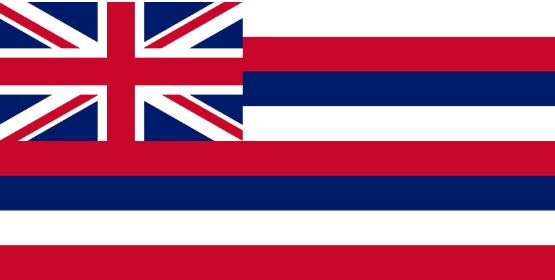
Hawaii, USA -  Hawaii, USA - Flag of Hawaii Adopted December 29, 1845

The state of Hawaii consists of eight main islands: Niihau, Kauai, Oahu, Maui, Molokai, Lanai, Kahoolawe and the Big Island of Hawaii.

Hawaii is the most isolated population center on the face of the earth. Hawaii is 2,390 miles from California; 3,850 miles from Japan; 4,900 miles from China; and 5,280 miles from the Philippines.

Hawaii is the only state that grows coffee.

More than one-third of the world's commercial supply of pineapples comes from Hawaii.
50states.com

Christmas in Hawaii: Downtown shopping centers in Hawaii display Santa's helpers as "menehunes," the legendary little people who are supposed to have been the first inhabitants of Hawaii before the Polynesians seized the islands. Palm trees are strung with decorate delights and fragrant flowers are hung in leis around the indoor Christmas tree. worldholidaytraditions.com


Explore even more about Hawaii, USA. Keep reading!


Hawaii Nostalgia: Vintage Photos, Ads, and Postcards

Hawaii, USA - Flag of Hawaii
Adopted December 29, 1845
Hawaii, USA
Pinterest    
Flag of Hawaii
Adopted December 29, 1845
Hawaii, USA - Street Scene, Honolulu, T. H.
Hawaii, USA

Postcard
Pinterest    
Street Scene, Honolulu, T. H.
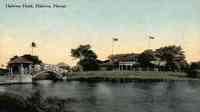
Hawaii, USA - Haleiwa Hotel, Haleiwa, Hawaii
Hawaii, USA

Postcard
Pinterest    
Haleiwa Hotel, Haleiwa, Hawaii
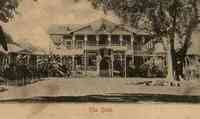
Hawaii, USA - Hilo Hotel, Hilo, Hawaii
Hawaii, USA

Postcard
Pinterest    
Hilo Hotel, Hilo, Hawaii

Discover Unique Gift Ideas and Genealogy Resources From or Related to HAWAII

Buy it NOW!

HAWAIIAN ROOTS - I'm from HAWAII! Hula Dancing Expert Mug

Embrace your inner island spirit with our "I'm from Hawaii! That explains a lot about my love for hula dancing and pretending I have rhythm" mug!

Discover Hawaii: History, News, Travel, and Stories

Add History/News/Story
1778 - Captain James Cook arrives in Hawaii
In 1778, Captain James Cook, the renowned British explorer, arrived in Hawaii during his third Pacific voyage. This momentous event marked the first documented European contact with the Hawaiian Islands, which Cook initially named the "Sandwich Islands" in honor of the Earl of Sandwich, the First Lord of the Admiralty. Cook's expedition aimed to explore the uncharted Pacific and find a potential northwest passage between the Atlantic and Pacific Oceans.

Cook's arrival in Hawaii had significant implications for both the native Hawaiian population and European exploration. The Hawaiians, who had developed a complex and isolated culture, were initially fascinated by the Europeans and their advanced technologies. However, this contact also brought about profound changes and challenges, including the introduction of new diseases and social disruptions. Cook's subsequent visits to the islands would further shape the course of Hawaiian history, culminating in his eventual death during a... Read MORE...

1795 - King Kamehameha I conquers most of Hawaii
In 1795, King Kamehameha I of Hawaii achieved a significant milestone in Hawaiian history by conquering most of the Hawaiian Islands. This event marked the culmination of years of strategic planning, alliances, and warfare. Kamehameha, who hailed from the Big Island of Hawaii, utilized both his formidable warrior skills and diplomatic acumen to unite the islands under his rule. His campaign for unification began in earnest after a prophecy suggested he was destined to rule all of Hawaii. With the support of British weaponry and advisors, Kamehameha's forces were able to gain a decisive advantage over rival chiefs.

The pivotal battle occurred at the Nu'uanu Pali on the island of Oahu. Here, Kamehameha's troops engaged in a fierce conflict with the forces of Oahu's chief, Kalanikupule. Utilizing superior tactics and firepower, Kamehameha's army pushed their enemies back up the steep cliffs of the Pali, resulting in a dramatic and decisive victory. This triumph effectively brought the ... Read MORE...

1826 - U. S. and Hawaii entered into treaty of friendship, commerce and navigation
In 1826, the United States and the Kingdom of Hawaii formalized their diplomatic relationship by signing a treaty of friendship, commerce, and navigation. This agreement marked the first formal recognition of Hawaii by a major world power and established a framework for mutual respect and cooperation between the two nations. The treaty was negotiated by Captain Thomas ap Catesby Jones of the USS Peacock, representing the United States, and representatives of King Kamehameha III of Hawaii.

The treaty allowed for the establishment of commercial relations, ensuring that American merchants could trade freely in Hawaiian ports, and provided protections for American citizens residing in Hawaii. This agreement laid the foundation for a growing economic relationship and paved the way for future treaties and interactions.
www.worldatlas.com/ webimage/ countrys/ namerica/ usstates/ hitimeln.htm
1829 - First coffee planted in Kona

In 1829, the first coffee plants were introduced to the Kona district on the Big Island of Hawaii, marking a pivotal moment in the history of coffee cultivation in the United States. Samuel Reverend Ruggles, a missionary, is credited with bringing the plants to Kona from Brazil. The rich volcanic soil, ideal elevation, and consistent climate of the Kona region created perfect growing conditions, leading to the development of what would become one of the most renowned coffee-growing areas in the world.

Over the years, Kona coffee gained a reputation for its smooth, rich flavor and aromatic qualities, distinguishing it from other coffee varieties. The industry flourished, contributing significantly to the local economy and culture.
www.worldatlas.com/ webimage/ countrys/ namerica/ usstates/ hitimeln.htm
1836 - July 30 – The first English language newspaper is published in Hawaii.
On July 30, 1836, Hawaii witnessed a significant cultural milestone with the publication of its first English language newspaper, the Sandwich Island Gazette and Journal of Commerce. This event marked an important development in the islands' history, reflecting the growing influence of Western culture and commerce. The newspaper was founded by Stephen D. Mackintosh and Charles Gordon Hopkins, who aimed to serve the increasing English-speaking population in Hawaii, including missionaries, merchants, and seafarers.
July 30, 1836
1853 - Smallpox epidemic killed over 5,000 in Hawaii
In 1853, Hawaii was devastated by a severe smallpox epidemic that claimed the lives of over 5,000 people, representing a significant portion of the population at the time. The outbreak began when an infected individual arrived in Honolulu, bringing the highly contagious virus to the islands. The disease spread rapidly, fueled by Hawaii's lack of prior exposure and immunity to smallpox. The Hawaiian government implemented quarantine measures and vaccination campaigns, but the efforts were insufficient to control the outbreak effectively.

The epidemic had profound and lasting impacts on Hawaiian society. The high mortality rate decimated communities, disrupted daily life, and weakened the social and economic fabric of the islands. The smallpox epidemic of 1853 stands as a stark reminder of the vulnerability of isolated populations to infectious diseases and underscores the importance of public health measures in managing outbreaks.
www.worldatlas.com/ webimage/ countrys/ namerica/ usstates/ hitimeln.htm
1872 - Day biting mosquitoes first arrived in Hawaii in 1872 as stowaways aboard a merchant ship, bringing with them new diseases such as malaria and the plague.

www.ereferencedesk.com/ resources/ state-facts/ hawaii.html
1879 - First locomotive operated on Maui
In 1879, Maui saw a significant milestone in its transportation history with the operation of its first locomotive. This event marked the beginning of the island's venture into modern railway systems, revolutionizing how goods and passengers were moved across its terrain. The locomotive was primarily used to support the burgeoning sugar industry, which was the backbone of Maui's economy at the time. The ability to transport sugar cane from plantations to processing mills efficiently enhanced production capabilities and streamlined distribution.

This introduction of rail transport not only boosted the sugar industry's efficiency but also facilitated broader economic growth and infrastructure development on the island. It represented a technological leap that connected various parts of Maui more effectively, contributing to the island's modernization.
www.worldatlas.com/ webimage/ countrys/ namerica/ usstates/ hitimeln.htm
1881 - Macadamia nuts introduced to Hawaii
In 1881, the introduction of macadamia nuts to Hawaii marked a significant milestone in the agricultural history of the islands. The journey of these nuts began in Australia, their native homeland, where they were first cultivated by Indigenous Australians. William H. Purvis, a sugar plantation manager from Scotland, is credited with bringing the macadamia trees to Hawaii. Purvis planted the first trees in the district of Kukuihaele on the Big Island of Hawaii, where they initially served as ornamental plants rather than commercial crops.

Over the years, the macadamia nut trees thrived in Hawaii's fertile volcanic soil and favorable climate, eventually leading to the establishment of a macadamia nut industry. By the 20th century, commercial production had taken off, and macadamia nuts became a significant agricultural export for Hawaii.
www.worldatlas.com/ webimage/ countrys/ namerica/ usstates/ hitimeln.htm
1885 - First pineapples were planted in Hawaii
In 1885, the first pineapples were planted in Hawaii, marking a significant milestone in the islands' agricultural history. This event was initiated by Captain John Kidwell, a prominent figure in Hawaii's agricultural development. He recognized the potential for pineapples to thrive in Hawaii's tropical climate and began experimenting with their cultivation. Kidwell's efforts laid the foundation for what would become a booming industry, crucial to Hawaii's economy.

The introduction of pineapples in Hawaii had far-reaching impacts. By the early 20th century, pineapple plantations had proliferated across the islands, and companies like the Hawaiian Pineapple Company (later known as Dole) emerged as industry giants. The pineapple industry not only boosted Hawaii's economy but also influenced its cultural and social landscape, attracting a diverse workforce from various countries.
www.worldatlas.com/ webimage/ countrys/ namerica/ usstates/ hitimeln.htm
1886 - Electricity arrived in Hawaii
In 1886, electricity arrived in Hawaii, marking a significant moment in the islands' technological and infrastructural development. The introduction of electricity revolutionized daily life, bringing modern conveniences and transforming the local economy. Prior to this, Hawaii relied primarily on traditional forms of lighting and power, such as oil lamps and manual labor.

The arrival of electricity had far-reaching impacts, allowing for the establishment of electric lighting in homes, streets, and businesses. This new source of power also spurred industrial growth, particularly in the sugar and pineapple industries, which were the backbone of Hawaii's economy at the time.
www.worldatlas.com/ webimage/ countrys/ namerica/ usstates/ hitimeln.htm
1893 - January 17 – The U.S. Marines intervene in Hawaii, resulting in overthrow of the government of Queen Liliuokalani of Hawaii.
In January 17, 1893, the United States Marines intervened in the Kingdom of Hawaii, ultimately leading to the overthrow of Queen Liliuokalani's government. This event, known as the overthrow of the Hawaiian Kingdom, was orchestrated by a group of American and European businessmen, along with some Hawaiian allies, who opposed the queen's attempts to establish a new constitution that would restore power to the monarchy and the Hawaiian people. The U.S. Minister to Hawaii at the time, John L. Stevens, played a controversial role in the events, supporting the overthrow and recognizing the new provisional government.

The queen, Liliuokalani, who had ascended to the throne in 1891, was a staunch advocate for the rights of the Hawaiian people and sought to strengthen the monarchy's authority. However, faced with the threat of U.S. military intervention and to prevent bloodshed, she temporarily yielded her authority to the U.S. government. Despite protests from the queen and her... Read MORE...

1895 - Hawaii
Hawaii, hā-wi'ee, or Hawaiian Archipelago, named by Captain Cook "The Sandwich Islands," after Lord Sandwich, of the Admiralty, is situated in the Pacific Ocean, in the route from San Francisco and Vancouver to China and Japan, about 2100 miles from the American coast. Lat. 19° to 22° 20' N.; Lon. 155° to 160° W. The group consists of 8 inhabited islands and several barren rocks, the names and area of the former being, Hawaii (the "Owyhee" of Captain Cook), 4210 square miles; Maui, 760; Oahu, 600; Kauai, 590; Molokai ("Lepers' Island"), 270; Lanai, 150; Kahoolawe, 63; and Nihau, 97. The total area of the archipelago is estimated at 7629 square miles. The islands are of volcanic origin, and here are found some of the largest volcanoes (both active and extinct) in the world. Mauna-Kea and Mauna-Loa, on the island of Hawaii (the latter an active volcano) are respectively 13,805 and 13,675 feet in height. Other mountains traverse this island, giving it a rugged and picturesque appearance, ... Read MORE...

1920 - Hawaii National Park established by Act of Congress
In 1920, the United States Congress passed an act establishing Hawaii National Park, marking a significant moment in the preservation of the Hawaiian Islands' natural beauty and cultural heritage. The park was created to protect the unique volcanic landscapes of Hawaii, including the active volcanoes Kilauea and Mauna Loa, along with the native Hawaiian ecosystems and archaeological sites found within its boundaries. This decision reflected a growing national interest in conservation and a recognition of the importance of preserving these areas for future generations.

The establishment of Hawaii National Park laid the groundwork for what would eventually become Hawaii Volcanoes National Park and Haleakalā National Park. It also set a precedent for the protection of natural and cultural resources in Hawaii and across the United States.
www.worldatlas.com/ webimage/ countrys/ namerica/ usstates/ hitimeln.htm
1927 - No Billboards Allowed
Hawaii’s natural beauty is an advertisement unto itself. To keep it that way, the state has officially outlawed billboards (with some exceptions) and aerial advertising, part of an “urban beautification” initiative that dates to 1927.
rd.com
1935 - January 11 – Amelia Earhart becomes the first person to fly solo from Hawaii to California.
On January 11, 1935, aviation pioneer Amelia Earhart achieved a groundbreaking feat by becoming the first person to fly solo from Hawaii to California. This flight marked a significant milestone in aviation history, showcasing Earhart's incredible skill and courage as a pilot. The journey was not without its challenges, as flying solo across the vast expanse of the Pacific Ocean presented numerous risks and obstacles.
January 11, 1935
1941 - December 7 - Japanese attacked Pearl Harbor
Attack on Pearl Harbor: Aircraft flying from Imperial Japanese Navy carriers launch a surprise attack on the United States fleet at Pearl Harbor in Hawaii, thus drawing the United States into World War II. The attack begins at 7:48 a.m. Hawaiian Standard Time and is announced on radio stations in the U.S. at about 11:26 p.m. PST (19.26 GMT). (Wikipedia)


On December 7, 1941, "a date which will live in infamy," Japanese planes attacked the United States Naval Base at Pearl Harbor, Hawaii Territory. The bombing killed more than 2,300 Americans. It completely destroyed the American battleship U.S.S. Arizona and capsized the U.S.S. Oklahoma. The attack sank or beached a total of twelve ships and damaged nine others. 160 aircraft were destroyed and 150 others damaged. The attack took the country by surprise, especially the ill-prepared Pearl Harbor base.

"AIR RAID ON PEARL HARBOR X THIS IS NOT DRILL."

The ranking United States naval officer in Pearl Harbor, known as the... Read MORE...

January 24, 1956 - Thirty-eight inches of rain deluged the Kilauea Sugar Plantation of Hawaii in 24 hours, including twelve inches in just one hour.

WeatherForYou.com
1959 - Hawaii became 50th U. S. state

www.worldatlas.com/ webimage/ countrys/ namerica/ usstates/ hitimeln.htm
January 2, 1961 - The coldest temperature of record for the state of Hawaii was established with a reading of 14 degrees atop Haleakela Summit.

WeatherForYou.com
Hilo, Hawaii is the wettest city in the U.S., averaging 126.69 inches of precipitation per year.

weather.com
Here's a list of places to go and things to do in Hawaii:
Waikiki Beach, Oahu: Start your Hawaiian adventure with a visit to Waikiki Beach in Honolulu. This iconic beach offers golden sands, great surf, and stunning views of Diamond Head, a volcanic crater.

Pearl Harbor, Oahu: Pay your respects at the Pearl Harbor National Memorial, which includes the USS Arizona Memorial and USS Missouri. Learn about the history of World War II and the events that led to the United States' involvement.

Hanauma Bay, Oahu: Snorkel in the crystal-clear waters of Hanauma Bay, a protected marine life conservation area. You'll encounter vibrant coral reefs and a variety of tropical fish.

Haleakalā National Park, Maui: Watch the sunrise from the summit of Haleakalā, a dormant volcano. Then explore the otherworldly landscapes, hiking trails, and unique flora within the park.

Road to Hana, Maui: Embark on a scenic drive along the winding Hana Highway. Waterfalls, lush rainforests, and dramatic coastal views await you on this journey.

Molokini Crater,... Read MORE...

Discover YOUR Roots: Hawaii Ancestry

Ancestors Who Were Born or Died in Hawaii, USA

We currently have information about 5 ancestors who were born or died in Hawaii.

View Them Now (sorted by year of birth)


Not the place you are looking for? Try again!

Search for YOUR Family by Place

To search for a place, specify place name below. Choose name from the list. Then SEARCH.
*Place Name:


Our Genealogy Gift Ideas

Visit Our Store

Ancestry Family Tree Search

Search for YOUR Family by Name

NOTE: If you don't know your ancestor's whole name or are unsure of the spelling, specify part of the name.

First Name (and Middle Name if applicable):
*Last Name:
Gender:
Born (+/- 2 years):
Died (+/- 2 years):
Match all terms exactly:

Updated: 6/17/2024 10:11:39 AM