


 Antoine
BOUTON
Antoine
BOUTON


Parents & Family of Antoine BOUTON
Explore parents, grandparents, spouses, children, and the family connections surrounding Antoine BOUTON.
Born: abt. 1675 in Saint-Just-en-Chevalet, Lyon, Lyonnais, Rhône, Rhône-Alpes, France
Antoine was an immigrant to Canada, arriving by 1702.
Spouse(s)/Partner(s) and Child(ren):
Antoine married Marthe FRECHET 20 November 1702 in Trois-Rivières, Canada, New France . The couple had (at least) 9 children.
Marthe FRECHET was born 10 October 1676 in Sainte-Anne-de-Beaupré, Québec, Canada (Beaupre). Marthe died 20 April 1758 in Trois-Rivières, Québec, Canada (Three Rivers). Marthe was the child of Pierre FRECHET (FRICHET) and Marie-Charlotte GODIN.
Antoine BOUTON died 14 January 1758 in Trois-Rivières, Canada, New France .
Details of the family tree of Antoine appear below.
Occupation
Recorded occupation: Forgeron et Taillandier
A forgeron, or blacksmith, was primarily a craftsman of wrought iron on the anvil. Protecting himself with a thick leather apron, he used a bellows (first made of leather, then wood and finally metal) to push the air that fuelled the coal fire of the forge, a type of cast iron table where the iron was reddened... Using pliers of various sizes to hold the hot iron, the blacksmith would then give it a specific shape with the help of different hammers. The blacksmith made farm instruments, vehicle accessories and even schooners, cemetery crosses, steel bandages, hooks for hay bales, etc.Source: tfcq.ca
Source: Old Sturbridge Village, Sturbridge, Massachusetts
 Québec Généalogie - Over time, Québec has gone through a series of name changes
From its inception in the early 1600s until 1760, it was called Canada, New France.
1760 to 1763, it was simply Canada
1763 to 1791 - Province of Québec
1791 to 1867 - Lower Canada
1867 to present - Québec, Canada.
Thanks to Micheline Gadbois MacDonald for providing this information.
Spouse & Children of Antoine BOUTON

 Marthe FRECHET
Marriage date: 20 November 1702
Marriage place: Trois-Rivières, Canada, New France
Source: Familysearch.org. Quebec Vital and Church Records (Drouin Collection) (Mormon Genealogy Records).
The French In North America: 1500-1783
Marthe FRECHET was the child of Pierre FRECHET (FRICHET) and Marie-Charlotte GODIN
Children of Antoine BOUTON and Marthe FRECHET
 Marie-Josette BOUTON
Died: 22 February 1707, Trois-Rivières, Canada, New France
Michelle BOUTONDied: 2 February 1793, Trois-Rivières, Lower Canada
 Marguerite BOUTON
Died: 29 May 1707, Trois-Rivières, Canada, New France
Marie-Josephe BOUTONDied: 27 January 1765, Trois-Rivières, Province of Québec, Canada
Marie-Antoinette BOUTONDied: ,
Louise BOUTONDied: 17 March 1744, Trois-Rivières, Canada, New France
Marie-Claire BOUTONDied: 4 February 1767, Trois-Rivières, Province of Québec, Canada
Marie-Charlotte BOUTONDied: 19 November 1722, Trois-Rivières, Canada, New France
 Jean-Baptiste BOUTON
Died: 18 August 1719, Trois-Rivières, Canada, New France
Add a life event, census record, military record, obituary, achievement, or photograph for Antoine BOUTON.
Life & Records
Photos, life events, and historical records for Antoine BOUTON.
Records about Antoine BOUTON and family appear alongside historical events from the same years. Each item is labeled so you can quickly tell family records from historical context.
BOUTON, Antoine... signed up from LaRochelle, France, for passage (engagé) to Canada in June 1698. He was a sheetmetal worker, a blacksmith and a laborer. He appears to have been in Trois-Rivières as a settler and farmer. In 1732, he sold a garden situated in the lower town of Trois-Rivières to Pierre Lefebvre, a master butcher. On the 5th of October 1734, he sold land measuring 3 arpents (approx. 2-1/ 2 acres) of frontage at the fief of Tonnacour to ancestor Michel Girard of the same fief.
apointinhistory.net/trois-rivieres.php

 1702 Marriage / Partner
Antoine BOUTON and Marthe FRECHET 20 November 1702, Trois-Rivières, Québec, Canada (Three Rivers)


1702 Marriage Immaculee Conception, Trois-Rivieres, QC, Canada
Familysearch.org. Quebec Vital and Church Records (Drouin Collection) (Mormon Genealogy Records).
The French In North America: 1500-1783
 1703 Birth of Child
Marie-Josette BOUTON was born 11 August 1703, Trois-Rivières, Québec, Canada (Three Rivers)
1705 Birth of ChildMichelle BOUTON was born 6 June 1705, Trois-Rivières, Québec, Canada (Three Rivers)
 1707 Death of Child
Marie-Josette BOUTON died 22 February 1707, Trois-Rivières, Québec, Canada (Three Rivers)
1707 Birth of ChildMarguerite BOUTON was born 29 May 1707, Trois-Rivières, Québec, Canada (Three Rivers)
1707 Birth of ChildMarie-Josephe BOUTON was born 29 May 1707, Trois-Rivières, Québec, Canada (Three Rivers)
1709 Birth of ChildMarie-Antoinette BOUTON was born 7 February 1709, Trois-Rivières, Québec, Canada (Three Rivers)
1712 Birth of ChildLouise BOUTON was born 1 May 1712, Trois-Rivières, Québec, Canada (Three Rivers)
1714 Birth of ChildMarie-Claire BOUTON was born 24 February 1714, Trois-Rivières, Québec, Canada (Three Rivers)
1715 Birth of ChildMarie-Charlotte BOUTON was born 13 October 1715, Trois-Rivières, Québec, Canada (Three Rivers)
1717 Birth of ChildJean-Baptiste BOUTON was born November 1717, Trois-Rivières, Québec, Canada (Three Rivers)
1719 Death of ChildJean-Baptiste BOUTON died 18 August 1719, Trois-Rivières, Québec, Canada (Three Rivers)
1722 Death of ChildMarie-Charlotte BOUTON died 19 November 1722, Trois-Rivières, Québec, Canada (Three Rivers)
1729 Marriage of ChildMichelle BOUTON married 3 February 1729, Trois-Rivières, Québec, Canada (Three Rivers) to Claude LECLERC dit BLONDIN
1735 Marriage of ChildMarie-Claire BOUTON married 4 July 1735, Trois-Rivières, Québec, Canada (Three Rivers) to Jean-Baptiste DUPRAT (PRATTE)
1744 Death of ChildLouise BOUTON died 17 March 1744, Trois-Rivières, Québec, Canada (Three Rivers)
1745 Marriage of ChildMarie-Josephe BOUTON married 7 January 1745, Québec, Québec, Canada (Quebec City) to Jean-Baptiste HARNOIS
1750 Marriage of ChildMarie-Antoinette BOUTON married 12 January 1750, Trois-Rivières, Québec, Canada (Three Rivers) to Joseph HERTEL
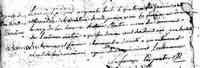

1758 Death. Immaculee Conseption. Trois Rivieres, Quebec.
Familysearch.org. Quebec Vital and Church Records (Drouin Collection) (Mormon Genealogy Records).
The French In North America: 1500-1783
Death — 175814 January 1758
Trois-Rivières, Canada, New France
Record added:
Last updated: 7/19/2025 5:21:50 PM
Explore Antoine BOUTON's Family & History
View charts and other tools for this ancestor and family.
Not the ancestor you were looking for?
Search for another person or explore genealogy by place.
Search for a Person by Name
Enter as much of the name as you know.
Search by Place
Continue Researching Antoine Bouton
Search other genealogy websites using this ancestor's known name, dates, and places.
Sign in to open targeted searches for this ancestor on Find a Grave, FamilySearch, and other collections.
New to GreenerPasture? Joining is free.Gifts & Resources Related to Saint-Just-en-Chevalet, Lyon, Lyonnais, Rhône, Rhône-Alpes, France
Explore local-history books, genealogy resources, and gifts connected with this ancestor's birthplace and family-history research.
Genealogy Gifts from Our Shop
Browse a few family-history favorites, or visit the shop to see the full collection.
 Grandma's Memories Hardcover Journal
 Genealogy Humor Coffee Mug
 Ask Me About My Ancestors Luggage Tag
 Genealogy Definition Car Magnet


Questions, Corrections & New Information
Ask a question or share a correction, source, or new detail about Antoine BOUTON.
When possible, include names, dates, places, and sources so the information is easier to verify.