GREENERPASTURE Free Family History Since 1999
Seasonal stories & historical reading

Flag associated with Dorchester, Dorset, England (Fordington) History of Dorchester, Dorset, England

Journey back in time to Dorchester, Dorset, England

Also known as(Fordington)

Explore the history, people, photographs, newspapers, postcards, and genealogy connected to Dorchester, Dorset, England.

ABOUT THE PLACE

About Dorchester

Dorchester, Dorset, England - Dorchester, Dorset, England -
Dorchester, England

A historic market town, Dorchester is on the banks of the River Frome to the south of the Dorset Downs and north of the South Dorset Ridgeway that separates the area from Weymouth, 7 miles (11 km) to the south.

In the 17th century the town was at the centre of Puritan emigration to America, and the local rector, John White, organised the settlement of Dorchester, Massachusetts.
Sourcekids.kiddie.com
Have family roots in Dorchester?Add your family to this place
MAP
Use the map to explore this place and its surroundings.
ADVERTISEMENT
VINTAGE DORCHESTER

Dorchester Nostalgia: Vintage Photos, Ads, and Postcards

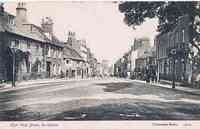
Dorchester, Dorset, England -
Dorchester, Dorset, England
Postcard
Pinterest
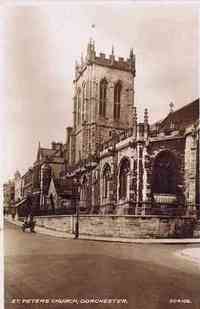
Dorchester, Dorset, England -
Dorchester, Dorset, England
Postcard
Pinterest
Dorchester, Dorset, England -
Dorchester, Dorset, England
Postcard
Pinterest
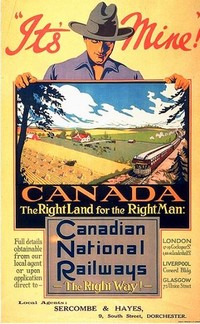
Dorchester, Dorset, England - Canada - The Right Land for the Right Man
Canadian National Railways
Local Agents: Sercombe & Haye
Dorchester, Dorset, England
Advertisement
Pinterest
Canada - The Right Land for the Right Man
Canadian National Railways
Local Agents: Sercombe & Hayes, 9 South Street, Dorchester
Genealogy gifts & optional resources
LOCAL HISTORY

Discover Dorchester: History, News, Travel, and Stories

Explore the events, newspaper stories, people, and moments that shaped Dorchester through the years.

1563 - Dorchester is struck by plague
During this period Dorchester remained a small market town. In 1500 it was said to have 260 houses, which probably gave it a population of around 1,000. Dorchester grew slowly and may have had a population of 1,700 by the early 18th century. This was despite outbreaks of plague in 1563, 1579 and 1595.
www.localhistories.org/ dorchestertime.html
1579 - The plague returns
www.localhistories.org/ dorchestertime.html
1595 - Plague strikes Dorchester again
www.localhistories.org/ dorchestertime.html
1610 - Dorchester is given a charter
In 1610 Dorchester was given a charter (a document granting the townspeople certain rights and reforming local government). Dorchester was given another charter in 1630.
www.localhistories.org/ dorchestertime.html
1613 - Dorchester is badly damaged by fire
In 1613 Dorchester suffered a severe fire, which destroyed much of the town. There were other less serious fires in Dorchester in 1622, 1725, 1737 and in 1775. However in 1776 thatched roofs were banned in Dorchester to reduce the risk of fire.
www.localhistories.org/ dorchestertime.html
1625 - Trinity School is founded
There was a school in Dorchester in the Middle Ages but it was refounded as a grammar school in 1567. Trinity school was founded in 1625.
www.localhistories.org/ dorchestertime.html
1630 - The charter is renewed
www.localhistories.org/ dorchestertime.html
1643 - During the Civil War royalists capture Dorchester
In 1642 came civil war between king and parliament. Dorchester was a hotbed of Puritanism and so supported parliament. Attempts were made to fortify the town and Maumbury Rings were revamped as a fort. Nevertheless the royalists captured Dorchester in August 1643. The royalists then plundered Dorchester. The royalist soldiers moved on because they were needed elsewhere. They returned to Dorchester in July 1644 but this time they were fought off.
www.localhistories.org/ dorchestertime.html
Show more local history, news & stories
1685 - Following a failed rebellion 312 people are tried in Dorchester and 13 are executed in the town.
In 1685 a rebellion broke out in South-western England led by the Duke of Monmouth. However the rebellion was crushed. 'Hanging Judge' Jeffreys then held a series of trials in Chichester. Altogether 312 people were tried in the town. Thirteen men were executed in Dorchester. The heads of some were impaled on spikes as a warning to others. People found a new use for the Maumbury Rings. As late as 1767 they were used for public executions or hanging fairs, which always attracted large crowds.
www.localhistories.org/ dorchestertime.html
1700 - Dorchester has a population of about 1,700. The old wool industry is in decline.
During the 16th and 17th centuries the old wool industry continued in Dorchester but in the 18th century it died out due to competition with northern towns. However in the 18th century Dorchester became known for its brewing industry.
www.localhistories.org/ dorchestertime.html
1895 - Dorchester
Dor/ chester (anc. Durnovaria, and Durinum; Saxon, Dornceaster, probably a corruption of Durini Castra, i.e., the "Station of Durinum"), a town of England, capital of Dorset, on the Frome, at a railway junction, 8 miles N. of Weymouth, and 140 miles by rail S.W. of London. It is surrounded by fine avenues, and handsomely built, the poorer edifices being confined to the adjoining village, Fordington. It has 3 churches (one of which—St. Peter's—is an ancient structure, containing some curious monuments), a grammar school, several ancient poor's hospitals, a county hospital, workhouse, a handsome town hall with market-house, shire hall, county jail and house of correction, barracks, theatre, banks, and several interesting Roman remains, including traces of the ancient walls. In the close vicinity of the town are two entrenched stations, and the amphitheatre of Maumbury, the most perfect in the kingdom. Dorchester has a flourishing retail trade, breweries, and large fairs for sheep and...
Read more
1916
Dorchester, a municipal borough of England, capital of Dorsetshire, on the Frome, 8 miles N. of Weymouth and 115 miles SW. of London. One of its churches, St. Peter's, is an ancient structure, containing some curious monuments. Other noteworthy buildings are the guild-hall and the corn exchange. Traces of the ancient walls still exist. In the close vicinity of the town are an immense ancient camp and the most perfect Roman amphitheatre in England. Pop. in 1891, 7946 ; in 1901, 9458.
Here's a list of places to go and things to do in and around Dorchester:
Dorset County Museum: Start your journey by exploring the rich history of the region at the Dorset County Museum. It houses an impressive collection of artifacts, including the Dorset Giant, an ancient Roman mosaic, and fascinating exhibits about Thomas Hardy, who lived in Dorchester.

Max Gate: Visit the former home of the renowned English novelist and poet, Thomas Hardy. Max Gate provides insights into the life and works of this literary genius. The house and its gardens are beautifully preserved and offer a glimpse into Hardy's world.

Maiden Castle: Just outside Dorchester, you'll find Maiden Castle, one of the largest and most impressive Iron Age hillforts in Europe. Take a walk through its ancient earthworks and soak in the panoramic views of the surrounding countryside.

Athelhampton House and Gardens: This historic manor house, located a short drive from Dorchester, features stunning architecture and beautifully landscaped gardens. Explore the house's grand rooms and...
Read more
GENEALOGY IN DORCHESTER

Discover YOUR Roots: Dorchester Ancestry

Explore ancestors connected to Dorchester through births, deaths, marriages, cemeteries, and local genealogy resources.

BIRTHS & DEATHS

Ancestors Who Were Born or Died in Dorchester, Dorset, England

We currently have information about 41 ancestors who were born or died in Dorchester.

View ancestors by year of birth
MARRIAGES

Ancestors Who Were Married in Dorchester, Dorset, England

We currently have information about ancestors who were married in Dorchester.

View married ancestors
Updated: 9/17/2023 6:39:42 PM
COMMUNITY

Discussion & Local Contributions

Share corrections, memories, local history, or family connections that may help other researchers.

Back to topSearch this place again