GREENERPASTURE Free Family History Since 1999
Seasonal stories & historical reading

Flag associated with , Mississippi, USA History of Mississippi, USA

Journey back in time to Mississippi, USA

Explore the history, people, photographs, newspapers, postcards, and genealogy connected to Mississippi, USA.

ABOUT THE PLACE

About Mississippi

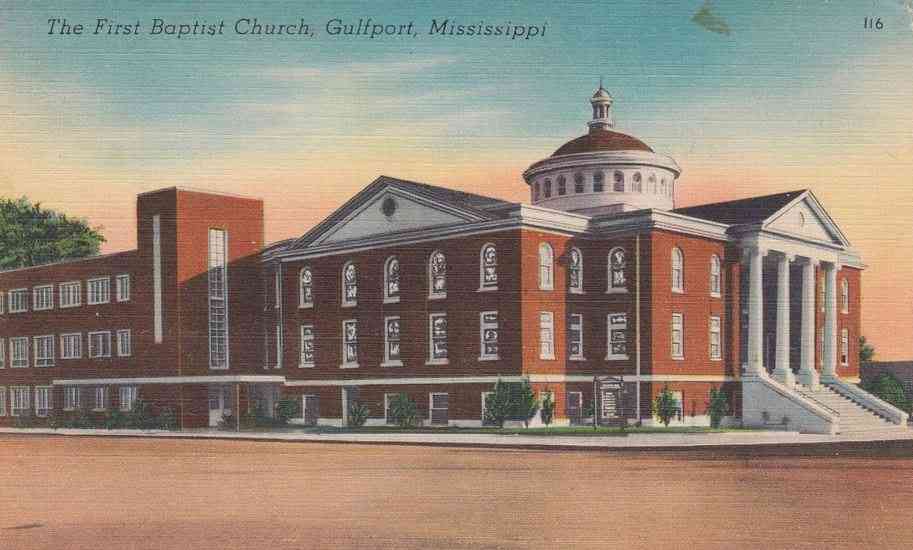
Mississippi, USA -  Mississippi, USA - The First Baptist Church, Gulfport, Mississippi
Mississippi

In 1902 while on a hunting expedition in Sharkey County, President Theodore (Teddy) Roosevelt refused to shoot a captured bear. This act resulted in the creation of the world-famous teddy bear.

Mississippi was the first state in the nation to have a planned system of junior colleges.

Mississippi is the birthplace of the Order of the Eastern Star.
50states.com

Dashing hatmaker John B. Stetson made his western creation at Dunn’s Falls after the Civil War, forever changing cowboy style. rd.com

"The state is named for the Mississippi River...the word, a French derivation of the Ojibwa messipi (alternately misi-sipi or misi-ziibi) actually means "big river."" mentalfloss.com
Source
Have family roots in Mississippi?Add your family to this place
MAP
Use the map to explore this place and its surroundings.
ADVERTISEMENT
VINTAGE MISSISSIPPI

Mississippi Nostalgia: Vintage Photos, Ads, and Postcards

Mississippi, USA - The First Baptist Church, Gulfport, Mississippi
Mississippi, USA
Postcard
Pinterest
The First Baptist Church, Gulfport, Mississippi
Mississippi, USA - Daily Herald
Mississippi
June 23, 1900
Mississippi, USA
Advertisement
Pinterest
Daily Herald
Mississippi
June 23, 1900
Mississippi, USA -
Mississippi, USA
(IL) - Chicago Tribune, Chicago, Illinois
Pinterest
Mississippi, USA - Capitol Street Looking East, Jackson, Miss.
Mississippi, USA
Postcard
Pinterest
Capitol Street Looking East, Jackson, Miss.
Mississippi, USA - Angelo's Place - Facing the Sparkling Waters of the Gulf on U.S. 90, Gulfport, Mississippi
Mississippi, USA
Postcard
Pinterest
Angelo's Place - Facing the Sparkling Waters of the Gulf on U.S. 90, Gulfport, Mississippi
Mississippi, USA - Flag of Mississippi
Adopted January 11, 2021
Mississippi, USA
Pinterest
Flag of Mississippi
Adopted January 11, 2021
Genealogy gifts & optional resources
OPTIONAL EXTRAS

Genealogy Gifts & Resources Related to MISSISSIPPI

Buy it NOW!

MISSISSIPPI Roots: Magnolia Love and Mosquitoes

Celebrate your Mississippi heritage with a blend of humor and pride with our "Mississippi Roots: Magnolia Love & Mosquitoes" ceramic mug! This charming mug is perfect for anyone who cherishes their southern ancestry and has a deep appreciation for the quirks of Mississippi life. Featuring the playful caption, "My ancestors came from Mississippi! That explains a lot about my love for magnolia trees that drop leaves like confetti and mosquitoes that deserve their own zip code," this mug brings a smile to your face every time you take a sip.
LOCAL HISTORY

Discover Mississippi: History, News, Travel, and Stories

Explore the events, newspaper stories, people, and moments that shaped Mississippi through the years.

1729 - November 28 - Natchez Indians massacre 138 Frenchmen, 35 French women, and 56 children at Fort Rosalie, near the site of modern-day Natchez, Mississippi.
The Natchez Indians massacre of 1729 was a tragic event that occurred on November 28th at Fort Rosalie, near present-day Natchez, Mississippi. During this massacre, a group of Natchez Indians attacked the French settlement, killing 138 Frenchmen, 35 French women, and 56 children. The attack was a response to the increasing tensions between the Natchez tribe and the French colonists, who had established a presence in the region.

The massacre had significant repercussions, leading to a retaliatory campaign by the French against the Natchez tribe. This campaign culminated in the Natchez Indian War (1729-1731), during which the French, with the help of Choctaw and Chickasaw allies, eventually defeated the Natchez and effectively ended their power in the region.
onthisday.com
November 28, 1729
1797 - Spain ceded Mississippi to America
In 1797, Spain, facing internal and external pressures, ceded the Mississippi Territory to the United States, marking a significant event in American territorial expansion. The Mississippi Territory, located between the Mississippi River and the Appalachian Mountains, had been under Spanish control since the Treaty of Paris in 1783, which ended the American Revolutionary War.

The cession of the Mississippi Territory to America was part of a larger geopolitical strategy by Spain to improve relations with the United States while also focusing on other areas of concern.
worldatlas.com/ webimage/ countrys/ namerica/ usstates/ mstimeln.htm
1817 - Mississippi became 20th state; Indian lands opened for white settlement
www.worldatlas.com/ webimage/ countrys/ namerica/ usstates/ mstimeln.htm
1839 - Mississippi allows women to own property in their own names. It is the first state to do so.
In 1839, Mississippi made a significant stride in women's rights by becoming the first state to grant married women the ability to own property in their own names. This marked a notable departure from the prevailing legal norms, which typically treated married women's property as belonging to their husbands. The new law was a progressive step forward, recognizing women's rights to ownership and control over their own assets, including land and other forms of property.
theguardian.com/money/us-money-blog/2014/aug/11/women-rights-money-timeline-history
1861 - January 21 – American Civil War: Jefferson Davis resigns from the United States Senate.
...Mr. Davis, of Mississippi, formally took leave of the Senate in a few eloquent remarks. He wished to part with his late associates with kindness and good feeling, and if at any time he had wounded the feelings of any one by words spoken in debate, he begged pardon therefor...
The Raleigh Register
Raleigh, North Carolina
January 26, 1861
1862 - Decoration Day first celebrated in Mississippi
In 1862, amidst the American Civil War, a group of women in Columbus, Mississippi, began a tradition that would later become known as Decoration Day, a precursor to Memorial Day. The women, mourning the loss of Confederate soldiers, gathered to decorate the graves of both Union and Confederate soldiers at the Friendship Cemetery. This act of honoring the fallen on both sides, regardless of allegiance, was a poignant gesture of reconciliation and remembrance during a deeply divided time in American history.

The observance of Decoration Day quickly spread throughout the South, with communities coming together to decorate the graves of soldiers with flowers and other tributes. The tradition continued to evolve, eventually leading to the establishment of Memorial Day as a national holiday in the United States.
The World Almanac of the U.S.A, by Allan Carpenter and Carl Provorse, 1996
1870 - Mississippi readmitted to Union; public education established
www.worldatlas.com/ webimage/ countrys/ namerica/ usstates/ mstimeln.htm
1886 - March 17 – Carrollton Massacre: 20 African Americans are killed in Mississippi.
The Carrollton Massacre of 1886, which occurred on March 17th in Mississippi, was a tragic event that resulted in the death of 20 African Americans. The massacre took place in Carrollton, a small town in the state's Delta region, and was a part of the violent racial tensions that marked the post-Reconstruction era in the South. During this time, African Americans faced significant discrimination and violence as they sought to assert their rights and freedoms.

The exact details of the Carrollton Massacre are not fully clear, but it is believed to have been a racially motivated attack by white residents against the African American community. The incident was likely a response to the increasing assertiveness of African Americans in demanding their civil rights and political participation.
March 17, 1886
Show more local history, news & stories
1895 - Mississippi
Mississippi, one of the Gulf States of the American Union, bounded N. by Tennessee, E. by Alabama, S. by the Gulf of Mexico and Louisiana, and W. by Arkansas and Louisiana. Along its western borders flow the Missis sippi and Pearl Rivers, and for its northern limit it has the 35th degree of N. lat. Area, 46,810 square miles, of which 46,340 square miles are land and 470 water...

Population in 1800, 8850; in 1810, 40,352; in 1820, 75,448; in 1830, 136,621; in 1840, 375,851; in 1850, 605,948; in 1860, 791,305, of whom 436,631 were slaves; in 1870, 827,922; in 1880, 1,131,597; in 1890, 1,239.600.
1898 - Charm of Farm Life. The Rural Habitation is the Place Where Home Ties Are Strongest and Purest.
No one pretends that farmers are making money rapidly; they have their vexations and discouragements as do others, but they have several things to be very thankful for. They have good homes, in nearly every case, plenty of wholesome food and decent clothes. They are not under the eye of the task-master, nor working under great nervous strain, with every minute lost from work counted against them when pay day comes. They need not, in the language of the shops, "be afraid of their jobs;" they are working for themselves and are sure of their pay even if it is not as large as they wish it to be.

The main who looks upon his farm as a machine from which dollars only are to be made, and does not value any others of the numberless blessing it gives him, will never cease to talk about hard times. It is not alone for the money it will produce that the farm should be prized. It should be valued because it brings men and women near to nature's heart and their children grow up strong and...
Read more
1907 - Boll weevils destroyed cotton crops in Mississippi
www.worldatlas.com/ webimage/ countrys/ namerica/ usstates/ mstimeln.htm
1919-1920 - Mississippi was the first state to ratify the 18th Amendment to the United States Constitution, issuing in the era of Prohibition in 1919-1920
www.ereferencedesk.com/ resources/ state-facts/ mississippi.html
1927 - Mississippi River flooded 2,722,000 acres in Delta area; thousands homeless
www.worldatlas.com/ webimage/ countrys/ namerica/ usstates/ mstimeln.htm
1935 - September 24 – Earl W. Bascom and his brother Weldon produce the first night rodeo held outdoors under electric lights at Columbia, Mississippi.

In 1935, on September 24th, Earl W. Bascom and his brother Weldon made history by organizing and producing the first-ever night rodeo held outdoors under electric lights. This groundbreaking event took place in Columbia, Mississippi, marking a significant development in the world of rodeo sports. The introduction of electric lighting allowed for the rodeo to be held after sunset, providing spectators with a thrilling and unique nighttime entertainment experience.
September 24, 1935
1936 - April 5 – A tornado hits Tupelo, Mississippi, killing 216 and injuring over 700
On April 5, 1936, a devastating tornado struck Tupelo, Mississippi, leaving a trail of destruction and tragedy in its wake. The tornado, rated as an F5 on the Fujita scale, was one of the deadliest in U.S. history, claiming the lives of 216 people and injuring over 700. The twister ripped through the heart of Tupelo, demolishing homes, businesses, and entire neighborhoods in mere moments.

The aftermath of the tornado was a scene of utter devastation, with countless families left homeless and the community in shock. The response to the disaster was swift, with emergency services, volunteers, and relief organizations rallying to aid the survivors and begin the process of rebuilding.
April 5, 1936
1969 - August 17 - Camille, the second worst hurricane in U.S. history, smashed into the Mississippi coast.
Winds gusted to 172 mph at Main Pass Block LA, and to 190 mph near Bay Saint Louis MS. The hurricane claimed 256 lives, and caused 1.3 billion dollars damage. Several ocean going ships were carried over seven miles inland by the hurricane. The hurricane produced winds to 200 mph, and a storm surge of 24.6 feet. Complete destruction occurred in some coastal areas near the eye of the hurricane.
The Weather Channel
1984 - The state of Mississippi belatedly ratifies the 19th Amendment, granting women the vote.
nationalwomenshistoryalliance.org
There's something for everyone to explore in the Magnolia State. Here's a list of places to go and things to do in Mississippi:
Explore the Blues in Clarksdale: Clarksdale is known as the heart of the Mississippi Delta, the birthplace of the blues. Visit the Delta Blues Museum, explore historic Highway 61, and soak in the authentic blues atmosphere.

Natchez Trace Parkway: This scenic byway stretches for over 400 miles through Mississippi and offers beautiful views, hiking trails, and opportunities for bird-watching and picnicking.

Vicksburg National Military Park: Learn about the Civil War history of Mississippi at this park. Explore the battlefield, visit the USS Cairo Museum, and take in the breathtaking views of the Mississippi River.

Oxford: Home to the University of Mississippi (Ole Miss), Oxford is a charming college town with a vibrant arts scene, historic Square, and the famous Square Books. It's a great place for a leisurely stroll.

Tupelo: Visit the birthplace of Elvis Presley and explore the Elvis Presley Birthplace & Museum. You can also check out Tupelo Buffalo Park & Zoo or enjoy the...
Read more
GENEALOGY IN MISSISSIPPI

Discover YOUR Roots: Mississippi Ancestry

Explore ancestors connected to Mississippi through births, deaths, marriages, cemeteries, and local genealogy resources.

BIRTHS & DEATHS

Ancestors Who Were Born or Died in Mississippi, USA

We currently have information about 72 ancestors who were born or died in Mississippi.

View ancestors by year of birth
MARRIAGES

Ancestors Who Were Married in Mississippi, USA

We currently have information about ancestors who were married in Mississippi.

View married ancestors
Updated: 6/24/2024 9:32:10 AM
COMMUNITY

Discussion & Local Contributions

Share corrections, memories, local history, or family connections that may help other researchers.

Back to topSearch this place again